Feb 09, 2026
Intelligent Planet Hackathon Brings Global AI Perspectives
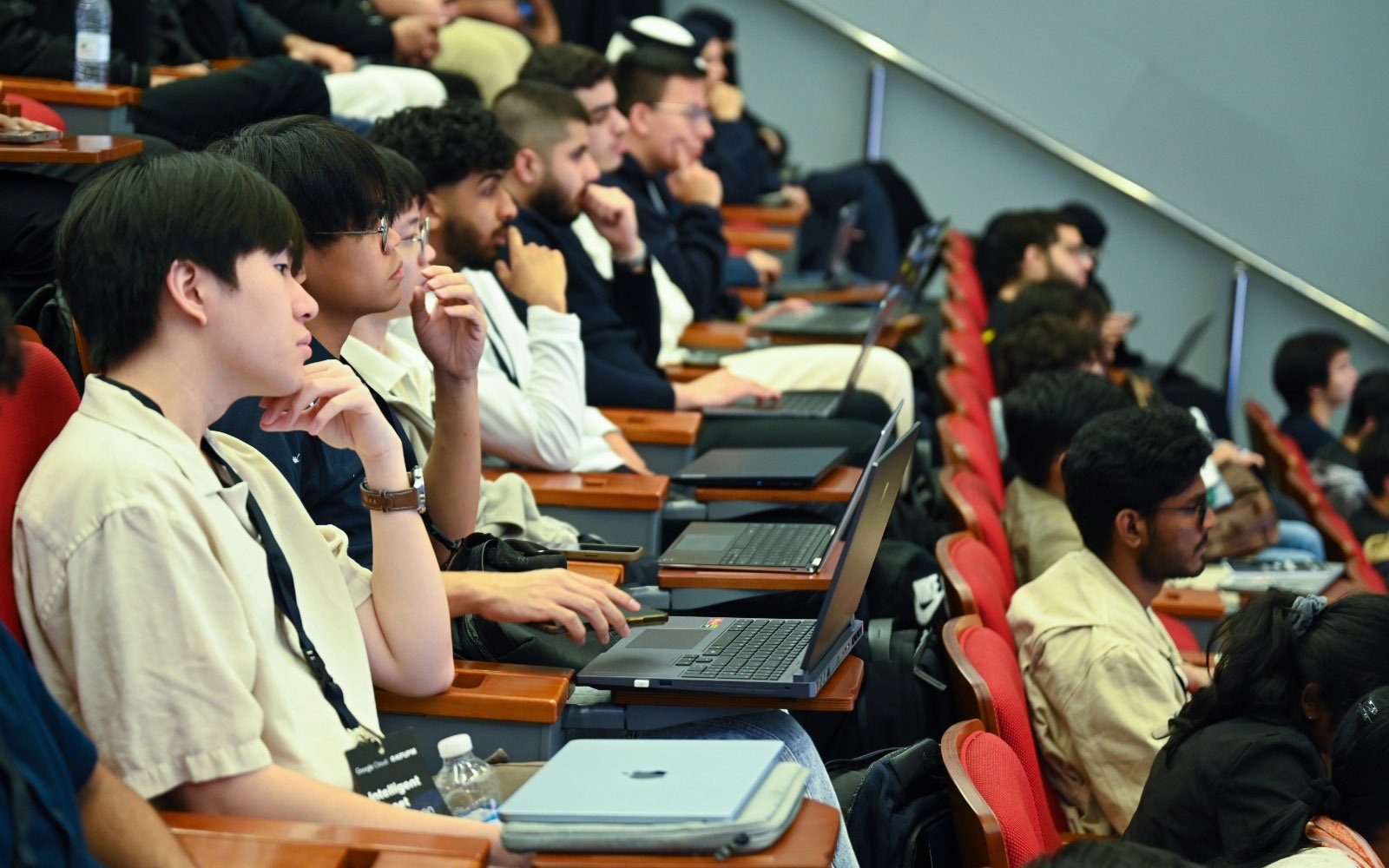
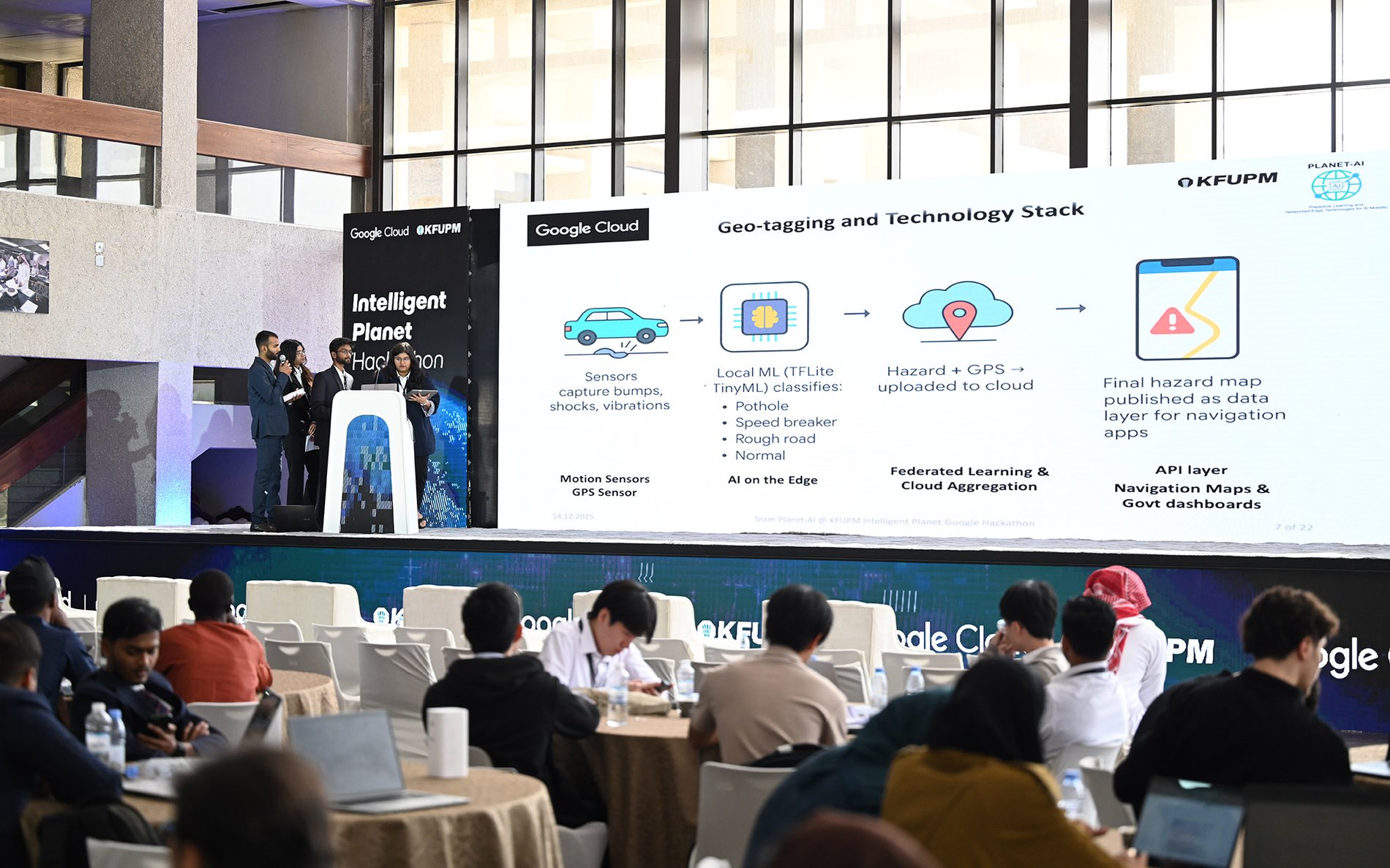
Organized by KFUPM in collaboration with Google Cloud, the Intelligent Planet Hackathon combined strenuous activities with multiple educational and inspirational sessions held from February 2nd to 4th, 2026. The event brought together students and experts to examine how artificial intelligence can be applied to urgent challenges across industries, with equal attention to feasibility and responsibility.
The scale of interest set the tone early. More than 2,000 students from around the world submitted proposals, from which 100 participants forming 25 teams were selected. Most of those participants traveled to KFUPM from outside Saudi Arabia, representing countries across all continents, including the United States, the Philippines, China, India, and Malaysia, Indonesia, Colombia, UK, Tunisia, Pakistan.
Work on the projects did not begin on campus, however. Starting in November, participants joined online mentoring sessions from Google Cloud mentors that focused on case development and project design. These sessions allowed teams to refine their ideas in advance, so the in-person program could focus on deeper technical work and critical discussion rather than early-stage formulation.
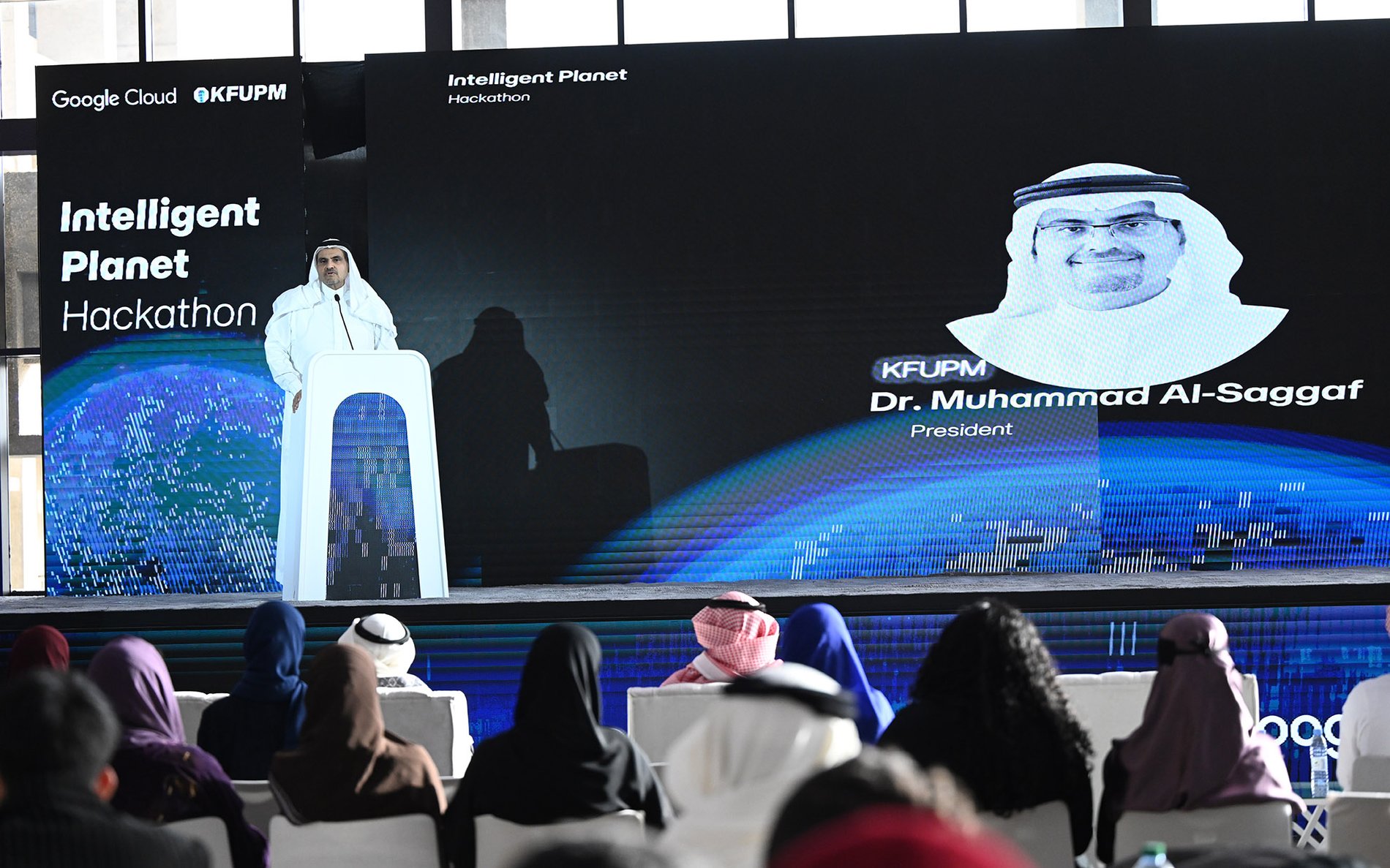
Across the three days on the KFUPM campus, the event progressed as a multi-layered program. In addition to the hackathon itself, participants attended keynote sessions, workshops, a roundtable conversation, and two panel discussions. These sessions were delivered by representatives from local digital and AI-focused companies, academia, government entities, and international visitors, offering students exposure to how AI is approached across sectors and regions.
During his opening remarks on the second day, Dr Abdullah Sultan, Dean of the College of Computing and Mathematics, drew attention to the range of topics addressed by the student teams and the diversity of industries represented among the guests. He encouraged active engagement, collaboration, and discussion. That message translated well into practice as students interacted closely with speakers and posed targeted questions during panel discussions.
One such exchange involved Dr Fahad AlMsned, Physician-Scientist and Chairperson of the Institutional Review Board at King Fahad Specialist Hospital. After participating in both panel discussions and meeting students early in the event, Dr AlMsned provided feedback to a student team arriving from India under the name Neurostars. Their project focused on an AI-based chatbot designed to support autism therapy sessions.
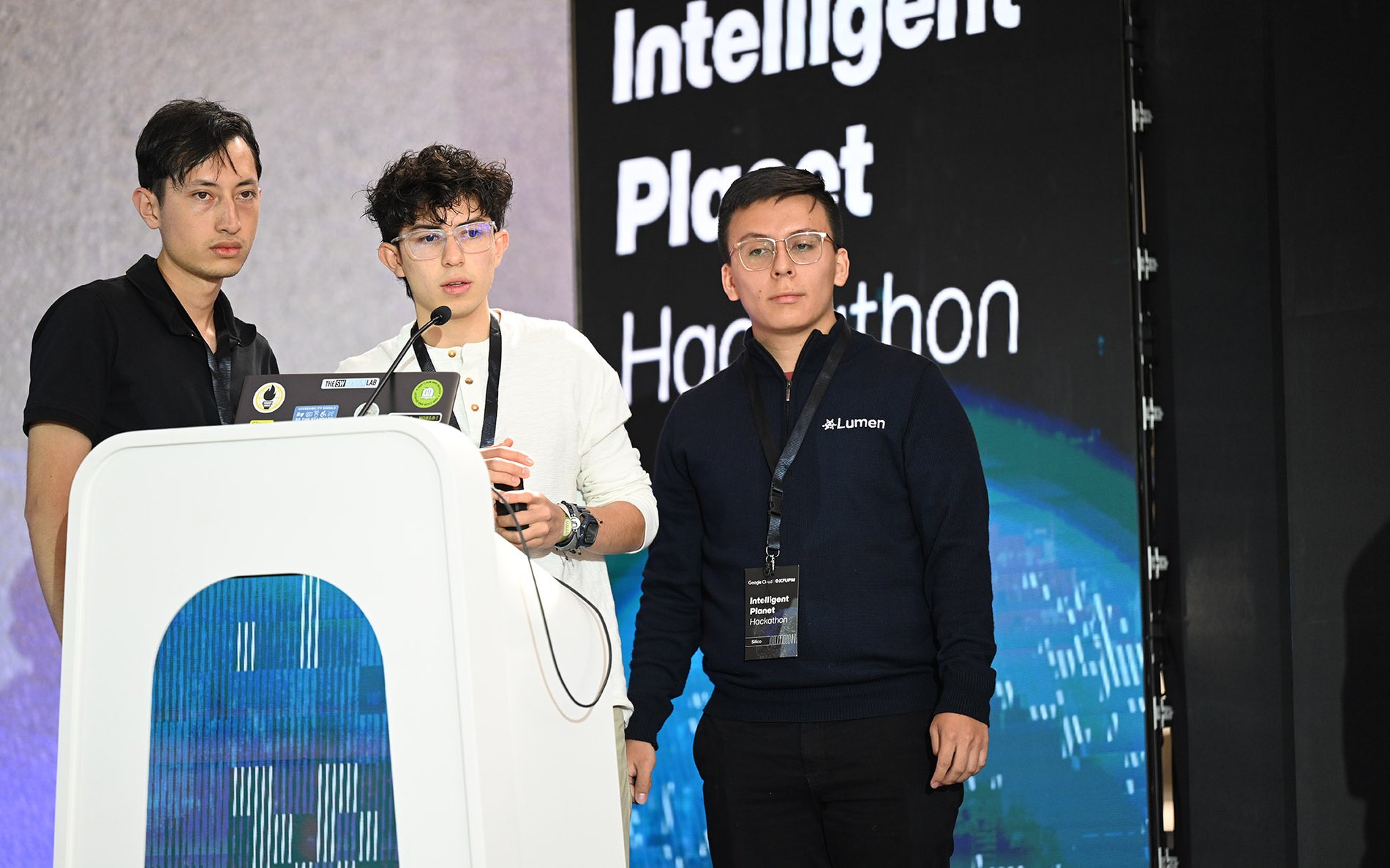
Vaishnavi Patil, one of the Neurostars participants and a student at Rajarambapu Institute of Technology, reflected on how that feedback transformed their thinking. “Dr Fahad told us about the economic factor. We were only focusing on the social and emotional factors.” Responding to the same project, Dr Fahad AlMsned said, “It’s a good solution. My suggestions were focusing on modifying the design to be ready for clinical adaptation.” He also noted his continued collaboration with KFUPM over the past two years, during which five joint projects have already been completed.
That mentorship opportunity, along with all their interactions during the event, influenced the team’s wider experience of Saudi Arabia as well. For Atharv Kulkarni, another member of Neurostars, the visit marked his first time in the Kingdom. Reflecting on his time at KFUPM, he said, “the professionalism which we see over here is amazing. The people we met are very practical and realistic.”
Ethics remained a recurring thread throughout the program. Discussions frequently returned to the long-standing debate on whether artificial intelligence enhances human capabilities or replaces them. Dr Majed AlSalamah, Head of Cybersecurity Strategy and Oversight Division at Saudi Aramco, addressed this tension through the lens of cybersecurity. He spoke about both the advantages and risks associated with AI, referencing a recent essay by an AI company CEO titled “The adolescence of technology,” which examines AI-related risks to society. Dr AlSalamah argued that the intersection between AI advancement and cybersecurity requirements determines whether digital systems become trusted infrastructure or points of risk.
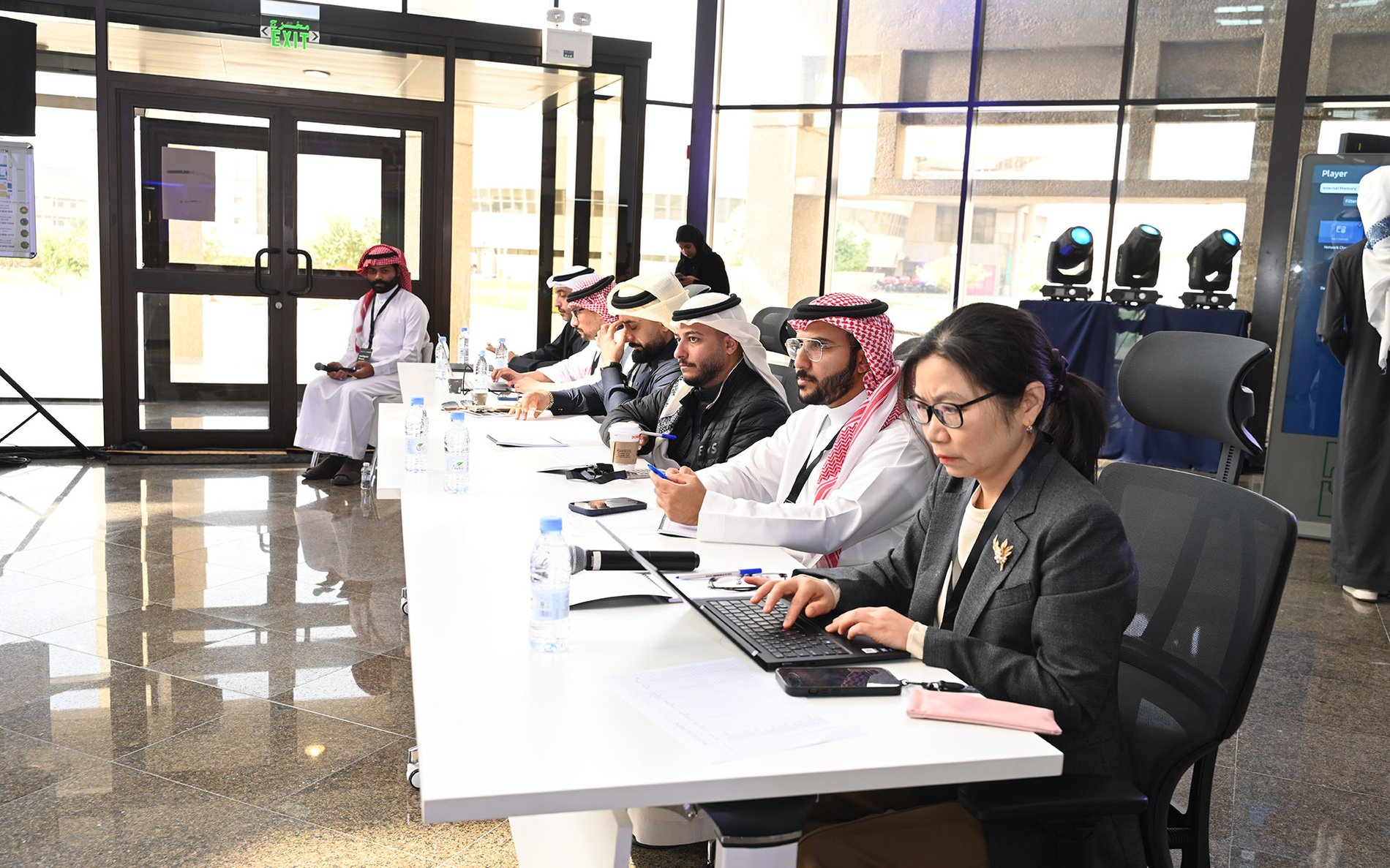
Looking ahead, Dr Khalid AlOhali, Head of Customer Engineering at Google Cloud, used his keynote address to outline the broader intent behind the partnership with KFUPM. He spoke about Google Cloud’s commitment to working closely with the university to advance student, faculty, and institutional capabilities in responding to complex technological challenges. He also noted the energy and passion he consistently observes during visits to the KFUPM campus, framing the hackathon as a space where different perspectives converge to pursue “the art of the impossible.”
This direction reflects earlier discussions between KFUPM and Google Cloud on advancing the university toward becoming a fully smart campus. The initiative began with the College of Computing and Mathematics, recognizing computing as the field through which other systems can evolve. Dr Abdullah Sultan expanded on this view by describing computing as a shared point of connection across both academic disciplines and industry sectors. As he explained, “We have a firm belief at KFUPM that computing is the interface between the university and the world. It is a common language that everyone is interested in learning.”
The top three winning teams in the hackathon came from Oman, the Philippines, and Saudi Arabia, with KFUPM’s student team placing fifth, reflecting the growing awareness and engagement with artificial intelligence across different parts of the world. The event outcomes pointed to both the university’s global reach and its academic depth, while demonstrating what becomes possible when students are supported through mentorship and structured guidance. The hackathon also reinforced KFUPM’s central role in advancing smarter applications across today’s fields in preparation for a more advanced tomorrow.
You May Also Like View all
- Engineering Triumph on the Global Stage Mar 04, 2026
- Strategic Excellence on the Global Consulting Stage Mar 03, 2026
- Where Bioengineering Meets Industry Feb 24, 2026
- Saudi Founding Day Brings Heritage to Life Feb 23, 2026