Dec 08, 2025
Internet Café at Diwan: Nostalgia Revisited
In a world of silent scrolling and solo screens, Diwan reopened the door to a forgotten moment in digital history on 29 November 2025, the digital garden exhibition revived a time when the digital world was sustainable, communal, and deliberately slow.
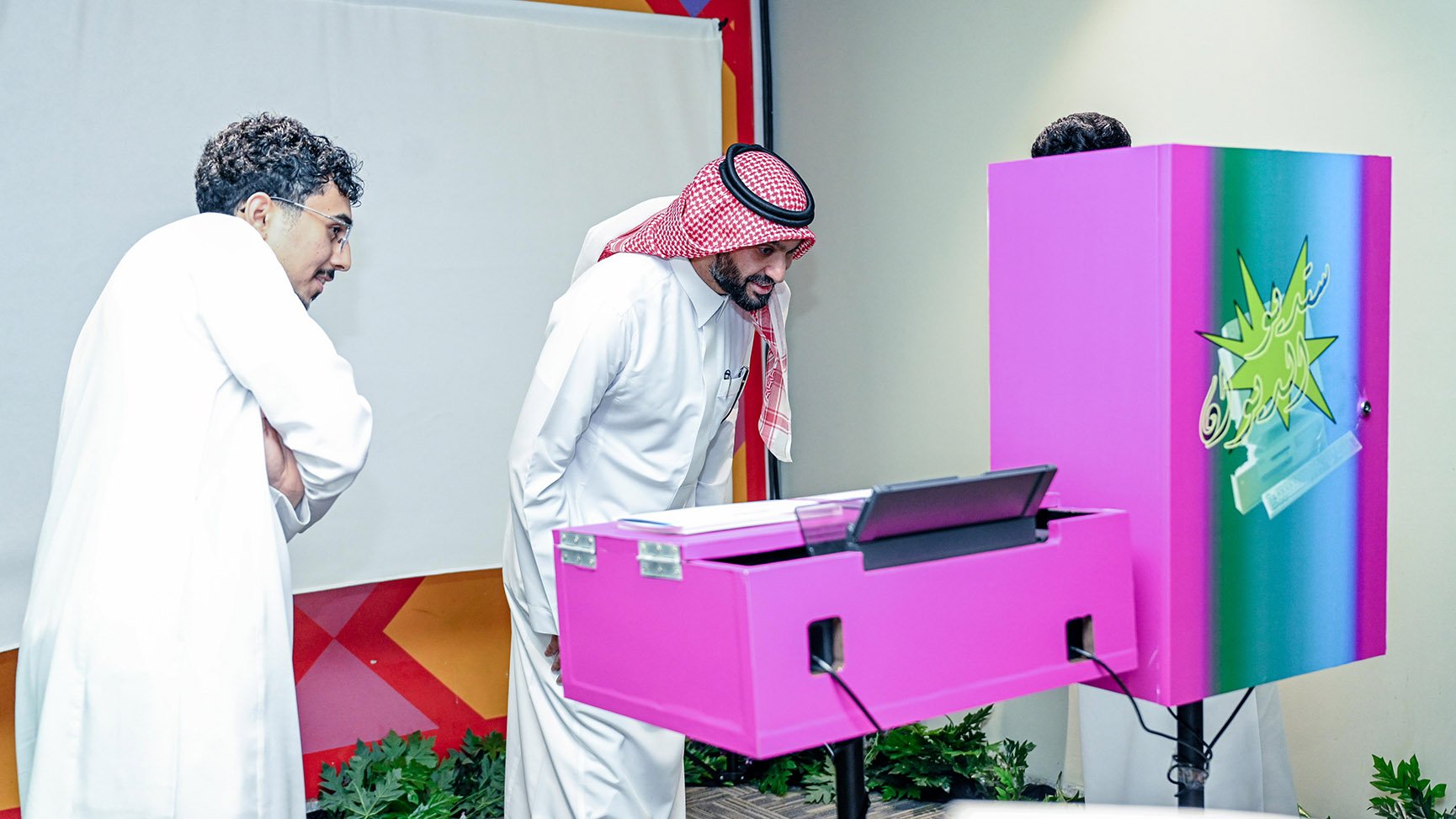
Through a unique three-day “Internet Café” exhibition, visitors stepped back into the late 1990s and early 2000s, when connection meant crowded rooms, familiar typing sounds, and conversations flowing between glowing screens. Long before personal devices dominated life, the internet was a shared experience, a place of laughter, discovery, and proximity.
Co-Organized in partnership with KFUPM, Diwan, and the Artist-run initiative Estiraha, the experience encouraged calm, curiosity, and creative discovery at a human pace.
The journey began inside the Diwan Majlis, where visitors explored the university’s digital archive within a room preserved in its historical form. There, they navigated KFUPM’s 1998 website — the year the internet first arrived on campus — experiencing a powerful link between past and present.
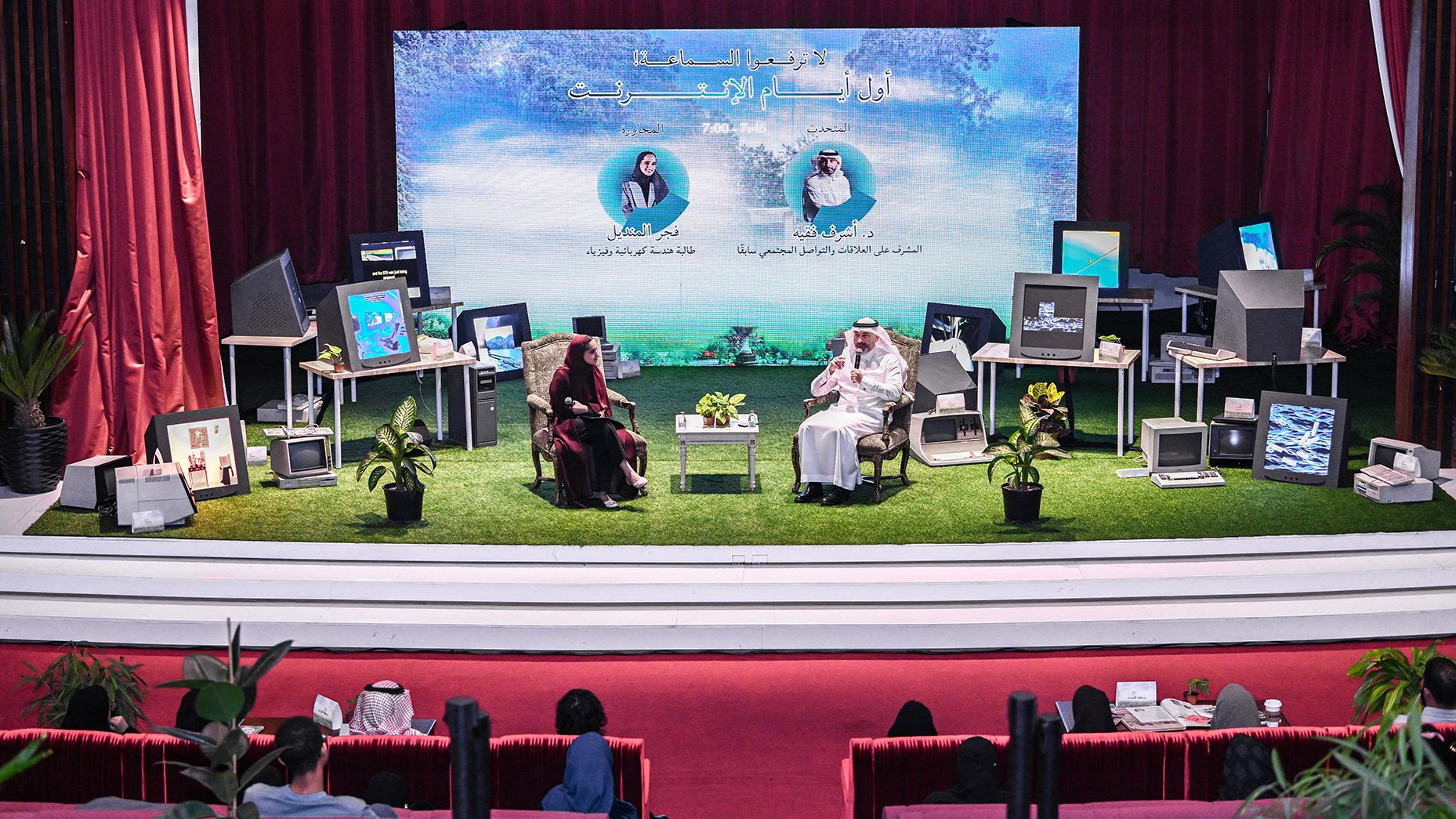
From there, the path opened into the Digital Garden, the heart of the exhibition. Fourteen artists, both local and international, displayed works inspired by memory, technology, and identity. Among them stood 12 original computers dating back to the 80s. The displayed devices were the very same ones used by KFUPM Faculty and students.
The experience continued in a curated reading zone, where visitors could explore selected books from the university library and archive. The next station is the “Garden Market,” a lively space where creatives and history-enthusiasts offered curated products inspired by the spirit of the exhibition.
What made this event exceptional was not only its concept, but its setting. Prince Naif Cultural Center (Building 10) was revived as a living cultural space once again. Its historic stage, once home to major university cultural performances, became the canvas for this contemporary artistic experience.
Led by Diwan’s passionate team, including Fajer Al-Mindeel, Wateen Al-Zahrani, Dina Albabtain, Nouf Al-Shamrani, Nadia Al-Binali, Reemas Al-Harthi, and Layan Al-Humairi, the exhibition reflected a generation’s desire to reconnect, not just with technology, but with each other.
Although created by Gen Z students, the exhibition resonated with visitors of all ages, bridging memory with imagination and offering a rare moment of shared presence inside an increasingly individualized digital world.
You May Also Like View all
- Eid Al Fitr Brings the KFUPM Community Back Together Mar 25, 2026
- Celebrating the Spirit of Ramadan: Ghabga 2026 Mar 05, 2026
- Engineering Triumph on the Global Stage Mar 04, 2026
- Strategic Excellence on the Global Consulting Stage Mar 03, 2026