
Oct 07, 2026
KFUPM Research Aims to Store Renewable Power Longer for Less
Making renewable electricity available whenever people need it requires affordable ways to store large quantities of it for a long time. “To fully realize the potential of renewable energy, sustainable and reliable energy storage systems are a must,” says Dr. Mohamad Shamsuddin Qamar, Associate Professor for Materials Science and Engineering, and research scientist at KFUPM’s Interdisciplinary Research Centers for Hydrogen Technology & Carbon Management, as well as for Sustainable Energy Systems.
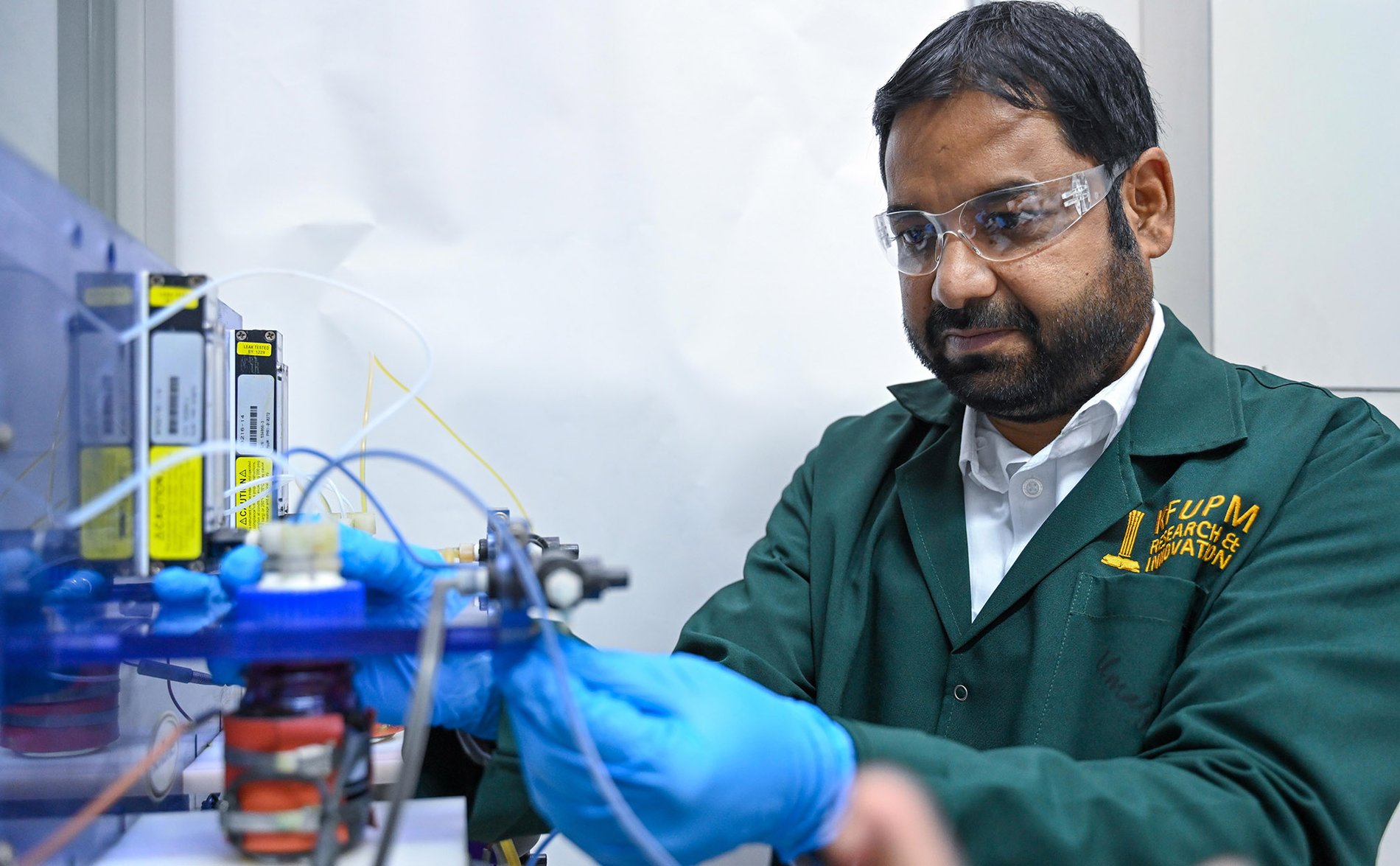
Dr. Qamar and his research team are developing an advanced battery energy storage system designed to extend the availability of renewable electricity while reducing the capital cost of long-lasting energy storage. The technology targets 10+ hours of energy storage and an estimated capital cost of approximately $100 per kilowatt-hour of storage capacity, with the potential to support a much wider deployment of reliable and affordable renewable energy.
One category of renewable energy is solar power, which presents a worldwide challenge. Its availability depends on daylight and weather conditions; clouds and fog can reduce electricity production, while generation stops after sunset. Yet homes, businesses and industrial facilities continue to need electricity throughout the evening. Storage systems can save surplus daytime production and release it when needed. With sufficient energy generation and appropriately sized storage, a facility could meet its electricity needs during both the day and night using primarily renewable sources.
This global need has motivated the team’s research, which also aims to support Saudi Arabia’s goal of generating 50% of its electricity from renewable sources by 2030. Working with national and international industry partners, the team is developing storage systems suited to the Kingdom’s large scale energy requirements and high outdoor temperatures.
Batteries provide one way to store renewable electricity. Another method, pumped hydropower, uses surplus electricity to pump water uphill, then releases it downhill to generate electricity when demand rises. This second approach requires suitable terrain with significant differences in elevation, making it less feasible in a desert environment.
Conventional lithium-ion batteries also present challenges when storage requirements increase. The components that store energy are the same ones that control how quickly the battery can deliver it. Expanding these systems, therefore, often requires additional or larger batteries, increasing the equipment needed and its cost. Meeting electricity needs at the scale of national grids makes affordable expansion particularly challenging.
Therefore, the KFUPM team is working on advancing redox flow battery (RFB) technology, a well-established approach to large-scale energy storage. In these systems, energy is stored in liquid electrolytes contained in external tanks, while the electrochemical cells that convert the stored energy into electricity are housed separately. This architecture allows the energy capacity to be increased simply by expanding the electrolyte volume and tank size, without requiring a corresponding increase in the power-conversion system. This decoupling of energy storage and power makes RFBs particularly attractive for scalable, long-duration storage systems. As such, facilities can increase how long their batteries’ electricity supply lasts without proportionally enlarging every part of the battery system, thus also helping control expansion costs.
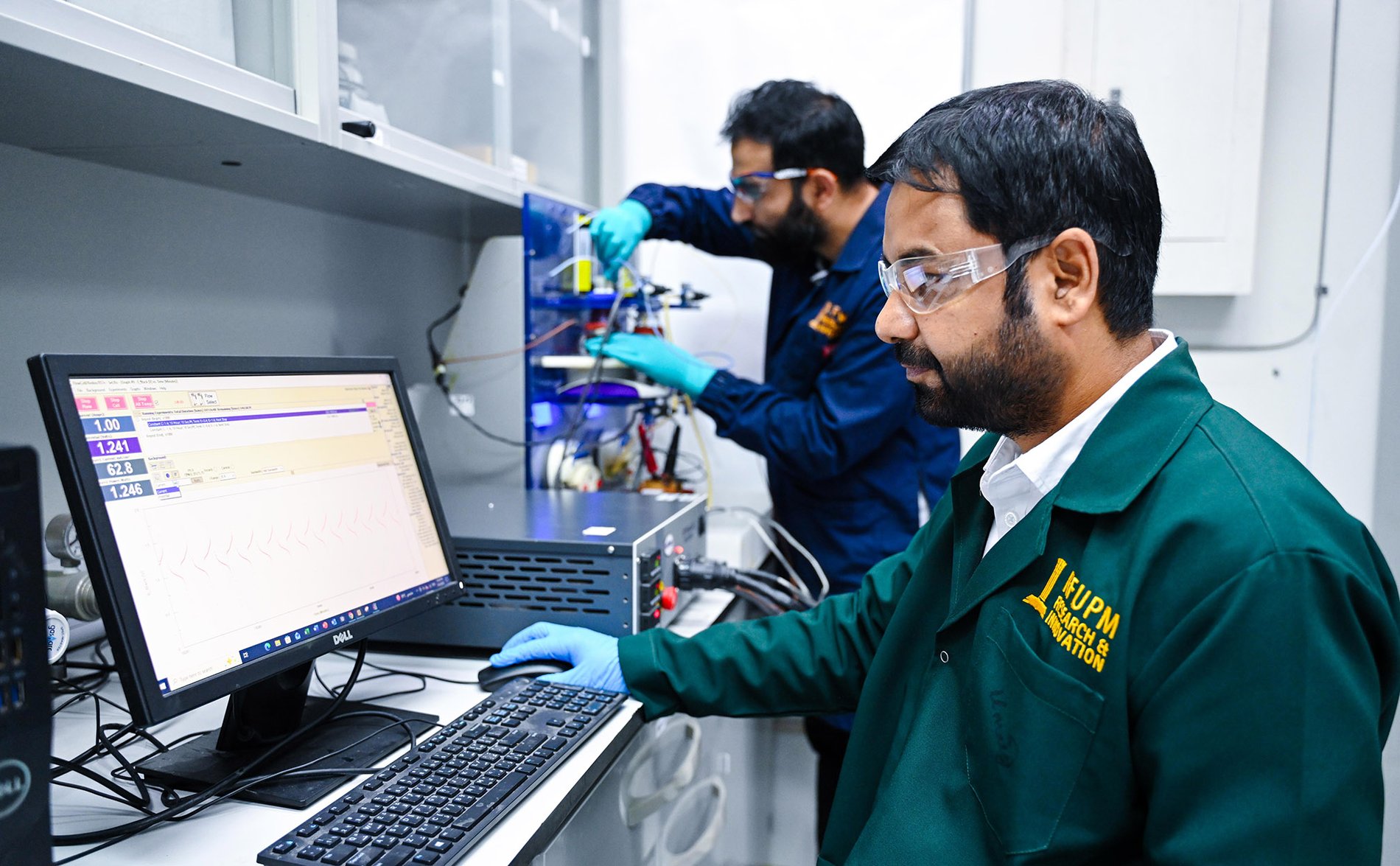
Dr. Qamar’s team is particularly focused on low-cost, metal or organic materials-based formulations of electrolytes that would allow more economical options to store large amounts of energy. Promising ones include iron and vanadium-based formulations. These would more easily enable the project’s target of approximately $100/kilowatt-hour, which stands far below the common $300+/kilowatt-hour costs for commercial and industrial solar battery storage.
Through its focus on making renewable electricity available at lower storage costs, the research directly supports UN SDG 7, Affordable and Clean Energy. Its usability for energy infrastructure also contributes to the aims of SDG 9 - Industry, Innovation and Infrastructure, while enabling greater use of renewable electricity further supports SDG 13 - Climate Action.
Additionally, for deployment in Saudi Arabia, affordability must be accompanied by tolerance to extreme heat. High temperatures can degrade the electrolyte and affect battery performance. The team’s early results show stability at temperatures of up to 50°C, an encouraging finding for systems expected to operate in desert conditions. Repeated charging and discharging tests are helping the researchers further assess performance under other conditions relevant to the Kingdom.
Given that vanadium-based RFBs can offer operational lifetimes of 20+ years, they’re well suited for long-duration energy storage. And, with the stability at elevated temperatures confirmed, the team expects their proposed systems would achieve long-term operational capabilities under Saudi Arabia’s hot climatic conditions. Further testing will establish whether the formulations can support that expectation in even more demanding local conditions.
As development continues, the short-term practical objective is to give electricity users an affordable way to save renewable energy until they need it. Longer storage duration and improved heat tolerance could help facilities make solar electricity a dependable part of both their daytime and nighttime supply.
You May Also Like View all
- GSR 2026 Connects Students Through Research and Innovation Oct 08, 2026
- Students’ AI Greenhouse Ranks 2nd Out of 250 Oct 04, 2026
- KFUPM Faculty Win Best Abstract Award at EuroMed Conference Sep 30, 2026