Nov 12, 2026
Turning Wastewater into a Water Resource for the Kingdom
“Our ultimate target is to inform policy decisions.”
- Dr. Mohammed Benaafi
Beneath Saudi Arabia’s surface lie vast reserves of groundwater, some accumulated over thousands of years. These underground reservoirs, known as aquifers, have long supported agriculture, industry, and everyday life. But in a country where rainfall is scarce and groundwater recharge is limited, much of it is being withdrawn faster than it can be replenished.
What if some of that water could be returned to the ground?
Researchers at KFUPM are exploring a promising answer: using treated wastewater to replenish underground aquifers, actively reducing the country’s reliance on its finite groundwater reserves.
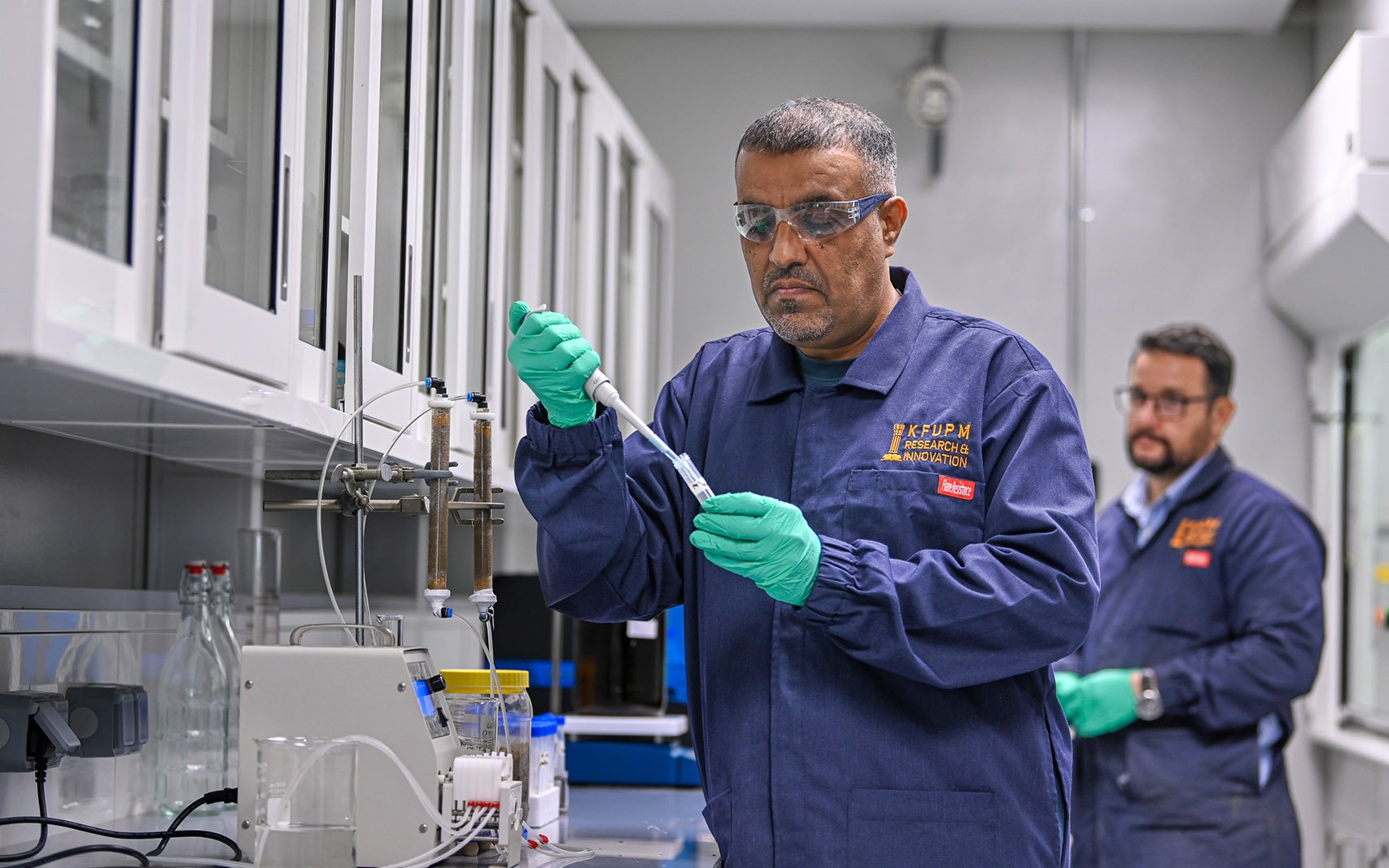
Led by Dr. Mohammed Benaafi, a research scientist at KFUPM’s Interdisciplinary Research Center for Membranes and Water Security (IRC-MWS), the project brings together researchers from the center and the Department of Geosciences to investigate a process known as managed aquifer recharge (MAR).
The principle is quite simple. Instead of allowing treated wastewater to go unused, it can undergo further treatment where necessary and be introduced into underground aquifers, helping refill water reserves. The challenge lies in determining how to do so safely, efficiently, and without compromising groundwater quality. To investigate this possibility, the research team conducted a series of laboratory experiments simulating conditions in the aquifers found in the Eastern Province of the Kingdom.
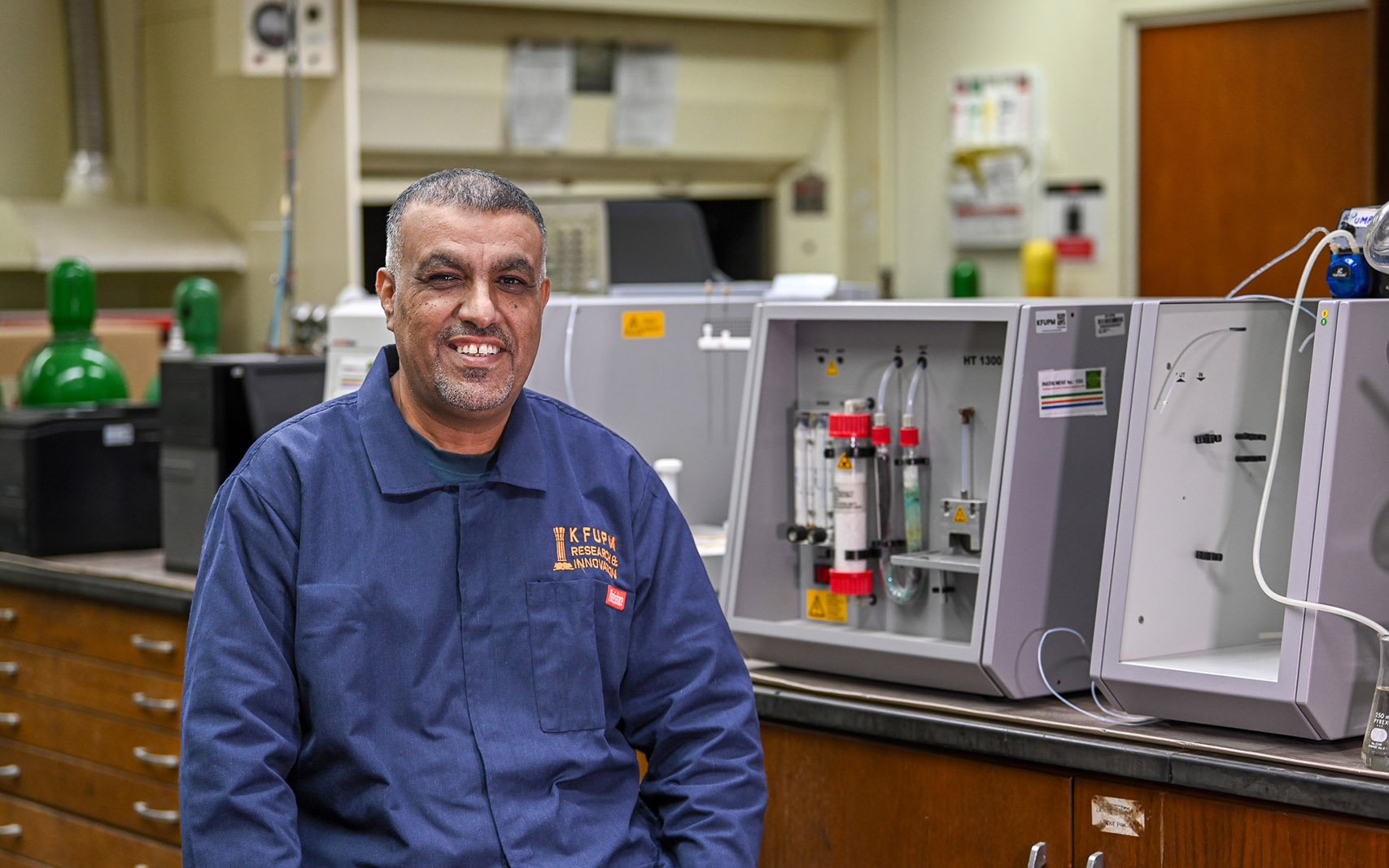
The researchers examined how different levels of wastewater treatment and different recharge rates affected the movement of water through underground materials. They also studied whether the process could cause clogging, a phenomenon that restricts water flow and reduces the effectiveness of aquifer recharge.
Their findings revealed an important distinction: introducing more water into an aquifer does not guarantee better results.
Higher recharge rates led to greater clogging and reduced hydraulic performance, particularly when using less extensively treated wastewater. By contrast, tertiary-treated wastewater introduced at lower rates produced the most favorable results, maintaining water flow while minimizing effects on groundwater quality and aquifer integrity. The team also investigated the need for additional treatment to remove emerging contaminants, including pharmaceuticals and microplastics, before the water is introduced underground.
Beyond the initial experiments, the researchers tested their findings using a three-dimensional laboratory model, monitored through electrical resistivity tomography, a technique that allows scientists to observe the movement of water through underground materials.
Together, these experiments provide a scientific basis for determining the conditions under which treated wastewater could be used for aquifer recharge.
A Resource Worth Preserving
According to the research, the Ministry of Environment, Water and Agriculture (MEWA) has established that approximately 437 million cubic meters of treated wastewater are produced annually in eastern Saudi Arabia. With appropriate treatment and recharge strategies, the researchers estimate that reusing this resource could reduce withdrawals from nonrenewable groundwater reserves in the region by up to 30%.
For Dr. Benaafi, the opportunity extends beyond replenishing aquifers. It calls for a fundamental change in how treated wastewater is perceived.
“We must rethink treated wastewater and treat it as a national strategic asset,” he explained.
The project could also help inform future water-management policies that support the Kingdom’s National Water Strategy by providing scientific evidence on the treatment standards and operating conditions needed for safe aquifer recharge. Such considerations are particularly important in coastal regions, where excessive groundwater extraction can also allow seawater to enter freshwater aquifers, making them increasingly difficult to use.
From Research to Reality
The work has already attracted international attention. The European Geosciences Union (EGU) featured the research in May 2026, highlighting its potential contribution to water security in arid regions. The story was subsequently carried by global scientific news outlets and media platforms throughout Europe, US, and Australia. The findings have also been published in the peer-reviewed journal Physics and Chemistry of the Earth, providing a foundation for further research and potential field applications. The next challenge is to take the approach beyond controlled laboratory conditions. Dr. Benaafi and his team hope to work with relevant national authorities to identify suitable locations for field implementation and contribute to the development of standards governing the use of treated wastewater in aquifer recharge.
For Saudi Arabia, where water security remains a national priority, the research points toward a future in which existing water resources can be used more effectively, and precious underground reserves are given an opportunity to recover.
Research referenced: