Feb 12, 2026
Next-Gen Prototypes Draw Crowds at World Defense Show
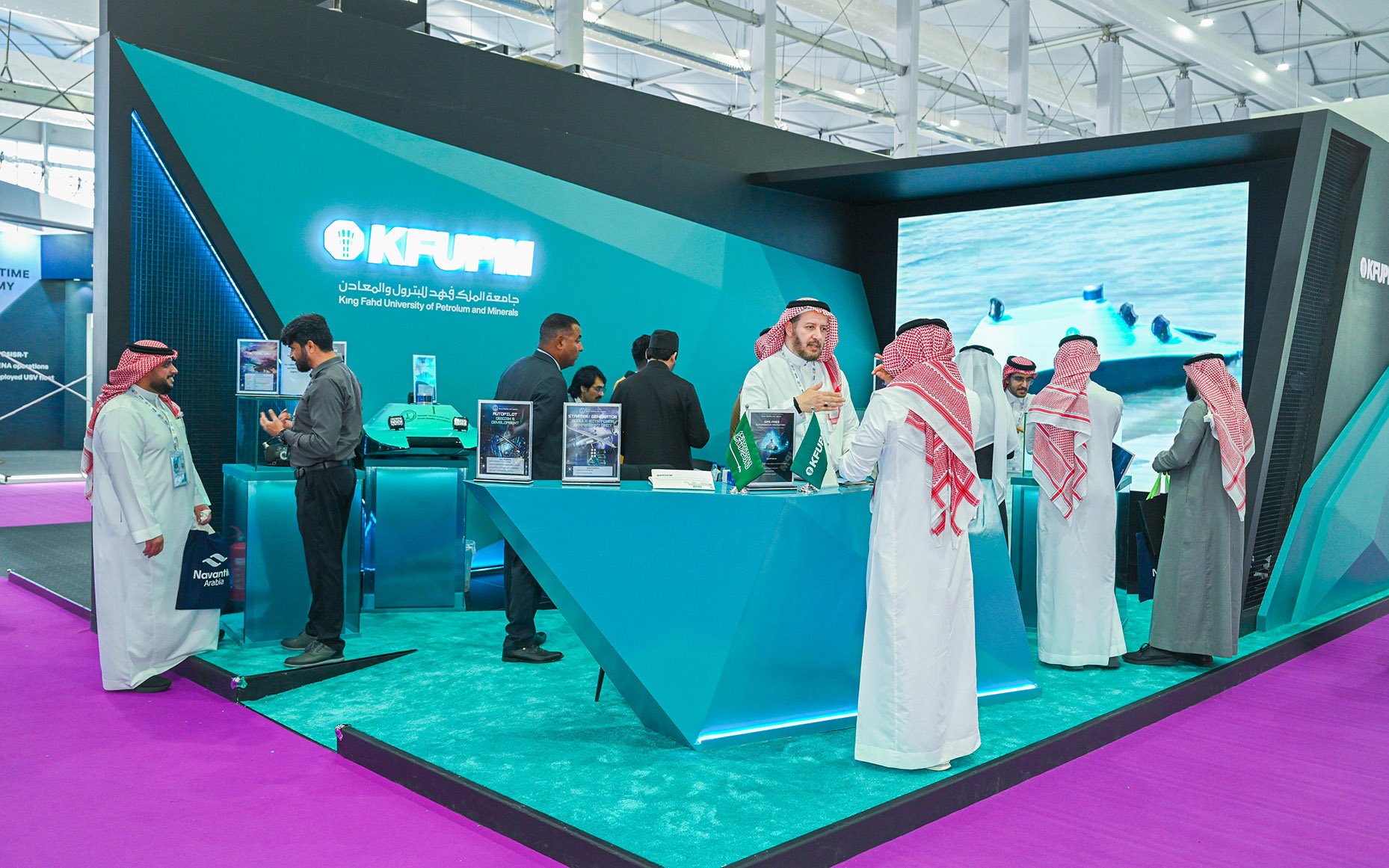
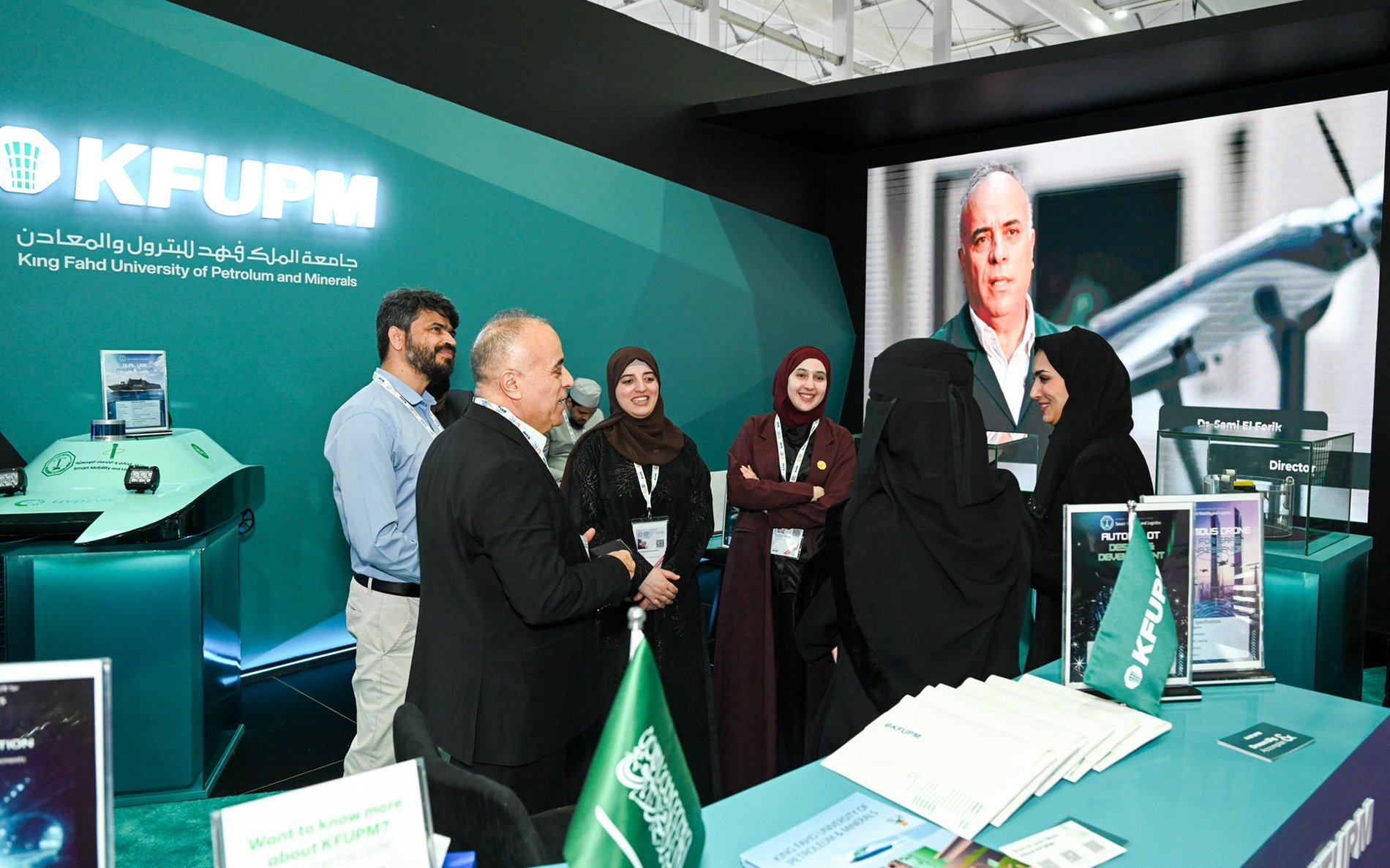
Presenting a wide portfolio of research prototypes, KFUPM took part in the 2026 World Defense Show (WDS), held in Riyadh from February 8 to 12. Developed with future defense and security applications in mind, the technical solutions presented at the event reflected targeted engineering and digital work across multiple booths.
Organized by the General Authority for Military Industries, the biennial exhibition marked its third edition this year, bringing together more than 770 exhibitors from over 75 countries and attracting upwards of 106,000 visitors across the five days. The show covered developments across land, air, sea, and space security, positioning Riyadh as a meeting point for defense manufacturers, research institutions, and government entities.
KFUPM’s booth focused on technologies that address propulsion, human–machine interaction, cooperative autonomy, industrial automation and intelligent systems, safety engineering and risk mitigation, as well as resilient reconnaissance.
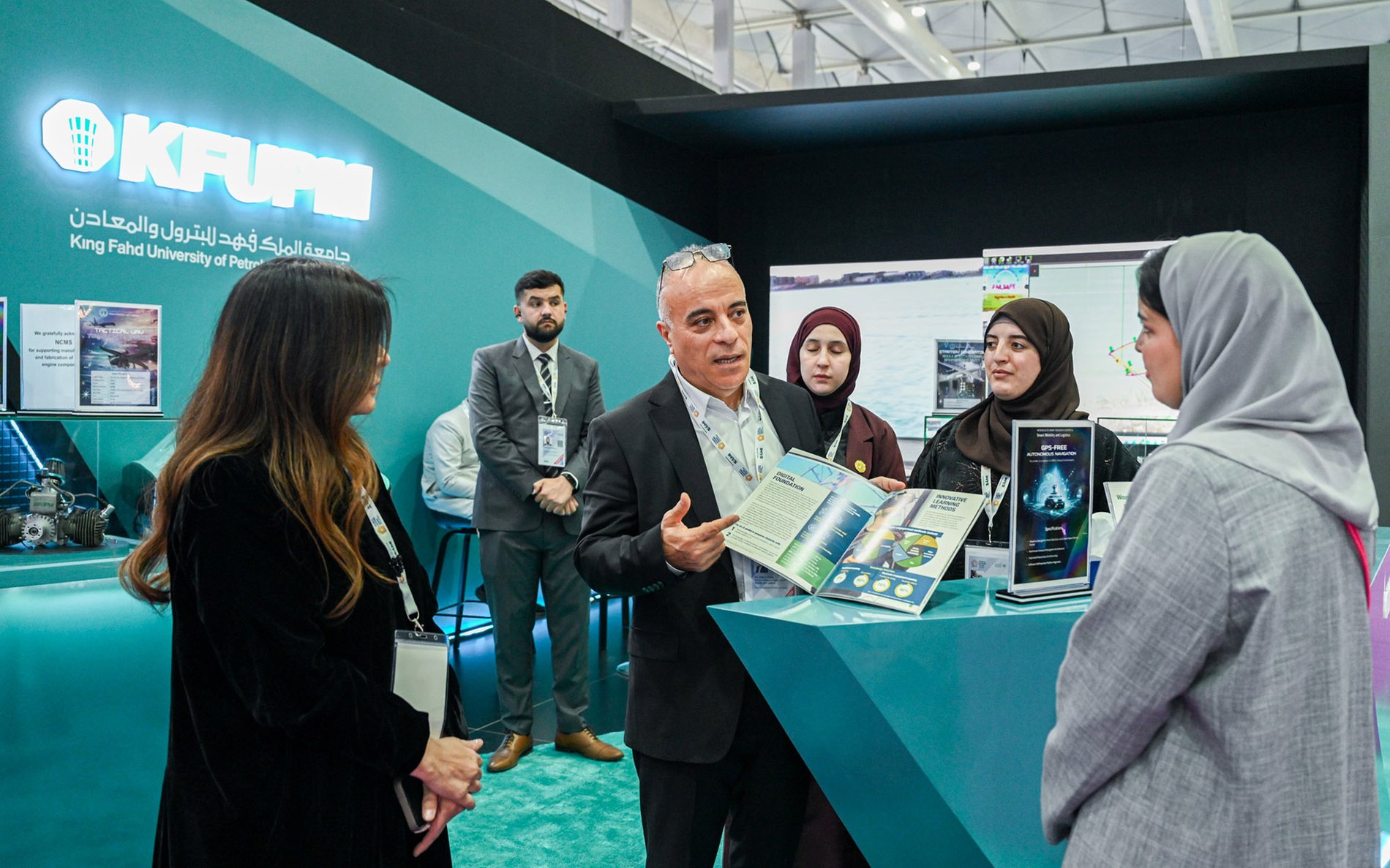
KFUPM’s Intelligent Manufacturing and Robotics Center (IRC-IMR) showcased a range of robots designed for the inspection and cleaning of hydrocarbon tanks, an innovative solution highly sought after by oil and gas companies. These robots operate autonomously inside tanks, performing cleaning and inspection tasks in areas that are difficult for humans to access and that may pose serious risks, such as suffocation. Their deployment significantly reduces maintenance time during shutdowns, thereby minimizing production downtime. Dr. Samir Mekid, former Director of IRC-IMR, revealed that discussions are currently underway with several companies that have expressed strong interest in adopting these solutions across various applications. Dr. Mekid further noted that many KFUPM alumni, now holding key leadership positions, visited the booth and expressed pride in seeing their university advancing through research and the development of innovative solutions.
The IRC-IMR also introduced a new digital Industry 4.0 platform, a one-of-its-kind developed locally in Saudi Arabia. This digital manufacturing solution is designed to transform traditional production systems into smart, connected, and data-driven operations, incorporating predictive analytics, quality tracking, and performance optimization. The platform further attracted interest from government institutions, local companies, and international stakeholders.
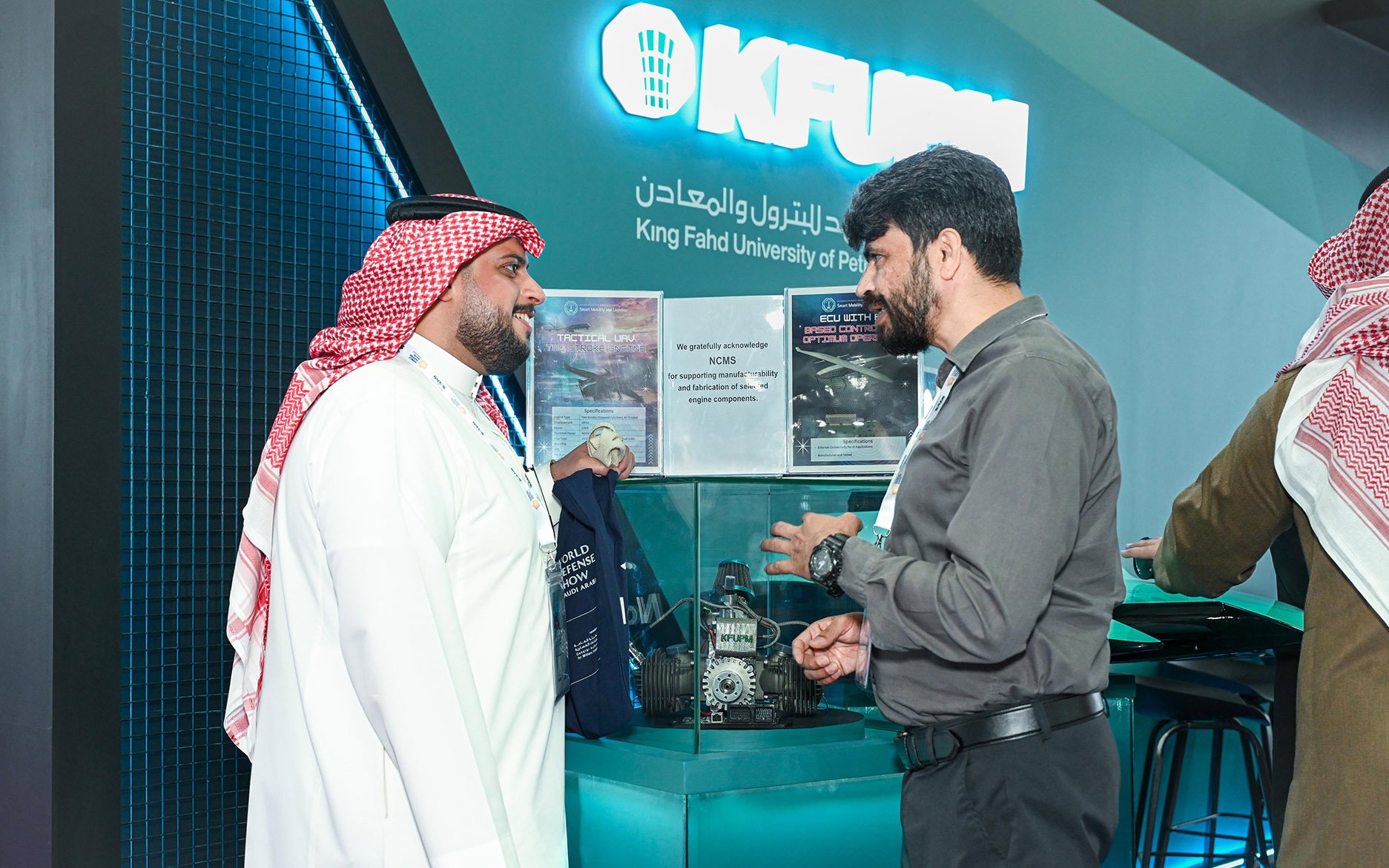
The university also presented an AI-based electronic control unit designed to optimize engine performance, a dual-use marine system adaptable for civilian and defense operations, an EEG-based intent adaptation system enabling more intuitive robotic control, and an autonomous drone swarm capable of GPS-free navigation. Together, these systems demonstrated KFUPM’s extensive design and prototyping capabilities.
Dr. Sami emphasized that participation in the World Defense Show aligns with the university’s broader strategic direction. He noted that Saudi Arabia’s Vision 2030 was conceived with international engagement in mind, and not limited to domestic priorities. Research developed within the Kingdom, he explained, should therefore be globally relevant and commercially viable. He also stressed that meaningful research begins with clearly defined needs and advances beyond existing solutions, anticipating future requirements rather than reproducing established work from elsewhere.
Among the highlights, was also a two-stroke unmanned aerial vehicle engine designed and manufactured entirely in Saudi Arabia. Developed by the university’s Interdisciplinary Research Center for Smart Mobility and Logistics (IRC-SML), in collaboration with the National Company for Mechanical Systems (NCMS), the engine emerged from operational and logistical challenges the research team faced with imported systems.
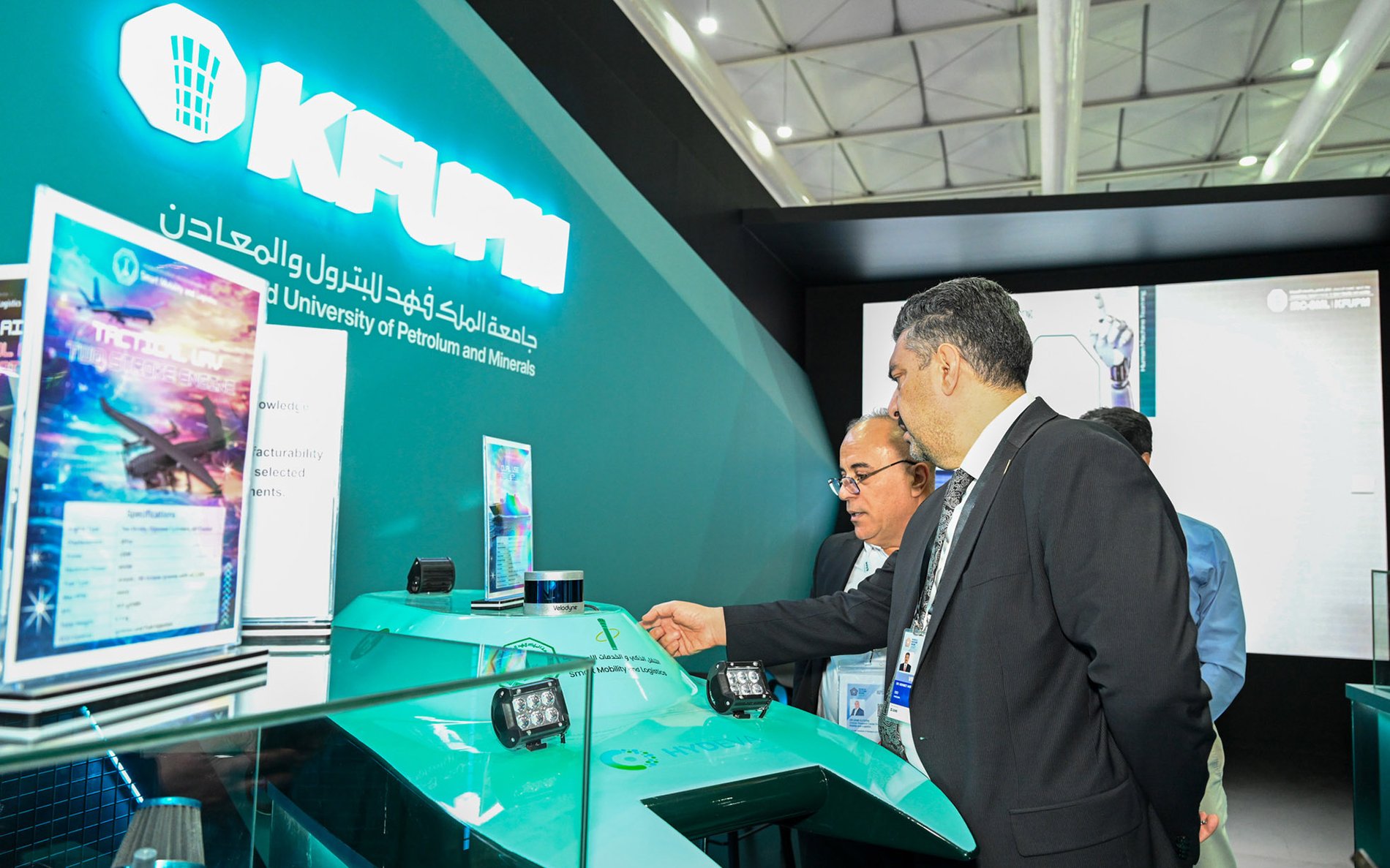
According to Dr. Sami El-Ferik, Director of IRC-SML, those constraints prompted a re-evaluation of existing solutions. The result was a lighter and more capable engine, with approximately 10% weight reduction and increased power capacity compared to alternatives previously used by the team. The current configuration, built with two cylinders, is suitable for lifting a 80-100 kilogram drone. However, the design can be expanded to a four-cylinder version to accommodate heavier payloads. In addition to technical improvements, the locally manufactured engine achieved cost reductions, reinforcing its commercial viability.
The university also presented an AI-based electronic control unit designed to optimize engine performance, a dual-use marine system adaptable for civilian and defense operations, an EEG-based intent adaptation system enabling more intuitive robotic control, and an autonomous drone swarm capable of GPS-free navigation. Together, these systems demonstrated KFUPM’s extensive design and prototyping capabilities.
Dr. Sami emphasized that participation in the World Defense Show aligns with the university’s broader strategic direction. He noted that Saudi Arabia’s Vision 2030 was conceived with international engagement in mind, and not limited to domestic priorities. Research developed within the Kingdom, he explained, should therefore be globally relevant and commercially viable. He also stressed that meaningful research begins with clearly defined needs and advances beyond existing solutions, anticipating future requirements rather than reproducing established work from elsewhere.
KFUPM’s participation in the 2026 World Defense Show demonstrated a consistent focus on applied research with direct pathways to deployment. By presenting locally developed systems alongside digitally integrated platforms, the university reinforced its role in developing advanced solutions based on identified operational needs and engineered for global relevance.
You May Also Like View all
- Reporting Week Highlights Compassionate Pedagogy Aug 20, 2026
- Orientation Week Opens a New Chapter at KFUPM Aug 17, 2026
- Research in Action at the Inbound Summer Research Program Aug 06, 2026
- KFUPM Celebrates Research Talent with Mawhiba Aug 03, 2026