Nov 22, 2026
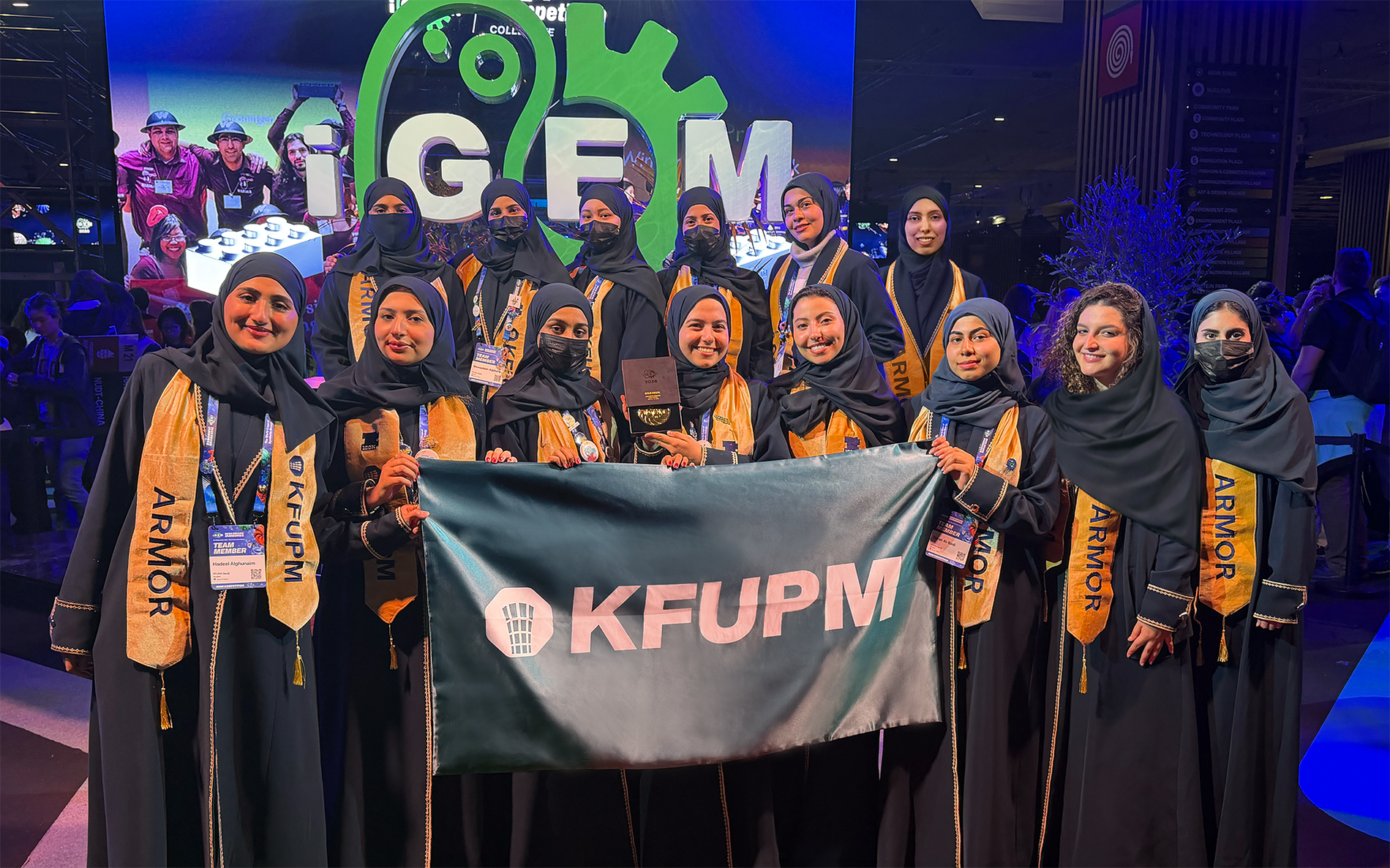
Student Team Strikes Gold at iGEM 2026 in Paris
A team of 14 students from KFUPM earned a Gold Medal at the International Genetically Engineered Machine (iGEM) Competition 2026, held November 13–16 in Paris, France. The result follows the university’s Silver Medal at iGEM in 2024, marking another milestone in KFUPM's growing participation in international synthetic biology competitions. Bringing together over 400 teams from more than 50 countries, the competition awarded 115 Gold Medals in the undergraduate category, recognizing teams that met its rigorous scientific and engineering standards.
The KFUPM team brought together students from four academic disciplines: Bioengineering, Materials Science and Engineering, Chemical Engineering, and Computer Science. The team members were Btoul Alkhalil, Abeer Alloush, Rimas Alqahtani, Dhay Alharthi, Mawaddah Aljohani, Sarah Al Badi, Alaa Alsaad, Eloah Marvila Padrone, Lina Aljurbua, Alaa Alshaikhi, Maha Abaalkhail, Hadeel Alghunaim, Bassmah Al Faress, and Maryam Aladsani.
Their project, ARMOR, explored an innovative DNA nanotechnology approach to protecting healthy cells from autoimmune attacks. The proposed technology aims to provide targeted protection while potentially reducing the side effects associated with conventional treatments that suppress the immune system more broadly.
Behind the achievement were seven months of research, preparation, and teamwork. The students developed the scientific concept, conducted computational modeling, and consulted 32 experts and specialists to refine their approach. They also created their own project website, educational games, videos, and interactive resources, introducing synthetic biology to children, high-school students, university students, and other audiences. Their work extended beyond the competition, helping make complex scientific ideas more accessible to the wider community.
The journey was not without challenges. Delays in receiving essential experimental materials prevented the team from completing its planned laboratory testing before the competition. Rather than allowing this setback to stop their progress, the students continued strengthening their computational models, research documentation, and scientific presentation. They presented ARMOR to an international judging panel, explaining its potential applications while openly acknowledging the experimental work still needed to validate the concept.
Supported by the Bioengineering Department, academic supervisors, and Student Affairs, the achievement celebrates more than a medal. It reflects the determination, creativity, and resilience of KFUPM students, who turned a challenging scientific idea into an internationally recognized project while gaining valuable experience in research, teamwork, and problem-solving.
You May Also Like View all
- Annual Tradition Brings Walkers Together for Health Nov 17, 2026
- Turning Wastewater into a Water Resource for the Kingdom Nov 12, 2026
- Student Team Excels at International Case Competition Nov 11, 2026