Feb 07, 2026
Students Win in AI Again with Third Place Nationally
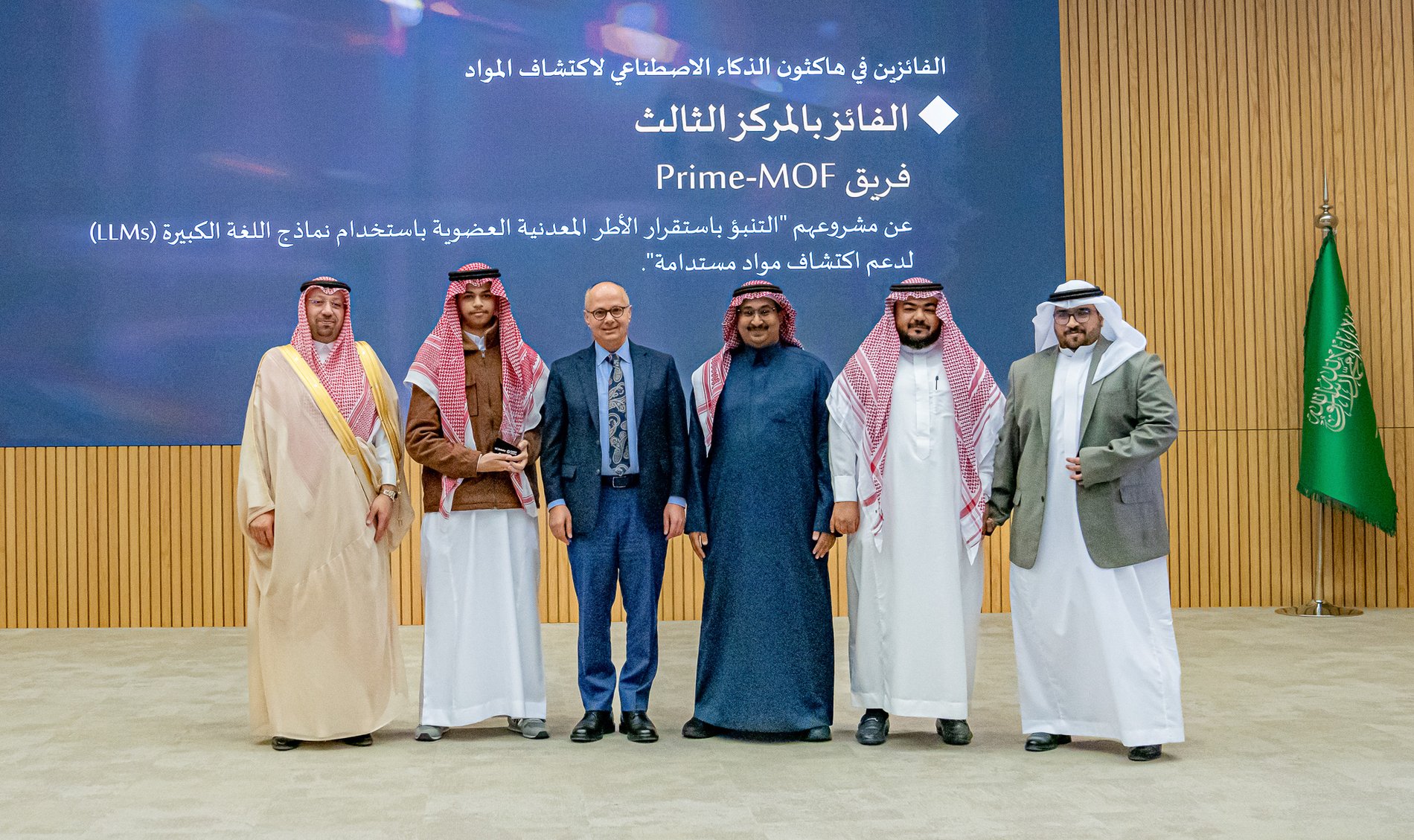
KFUPM students from the Chemical Engineering and Chemistry Department earned 3rd place at the GenAI for Materials Discovery Hackathon 2025-2026, a national competition centered on applying generative artificial intelligence to materials research for sustainability and clean energy. The event took place in Riyadh and brought together students and researchers working on energy and climate challenges through data-driven approaches.
Organized by King Abdullah City for Science and Technology (KACST) in collaboration with the University of California - Berkeley, HUMAIN AI, and Nobel Laureate Professor Omar Yaghi, the hackathon featured virtual training sessions covering reticular chemistry, large language models, and prompt engineering, concluding with an in-person showcase of student projects at Academy 32. Participants were challenged to design AI-based solutions that could support faster and more efficient materials discovery under real research conditions.
The winning team included Mohammed Ahmed Tuhami, Talal Alqahtani and Ahmed Alruwaili. Their solution focused on metal-organic frameworks (MOFs), materials with strong potential in clean energy and sustainability-related applications. Evaluating how MOFs perform and remain stable under varying operating conditions is often costly and time-intensive when relying solely on experimental methods. To address this, the students developed an AI tool that combined machine learning techniques with large language models (LLMs). The tool was designed to assess MOF performance across different conditions, helping researchers narrow down viable candidates earlier in the discovery process.
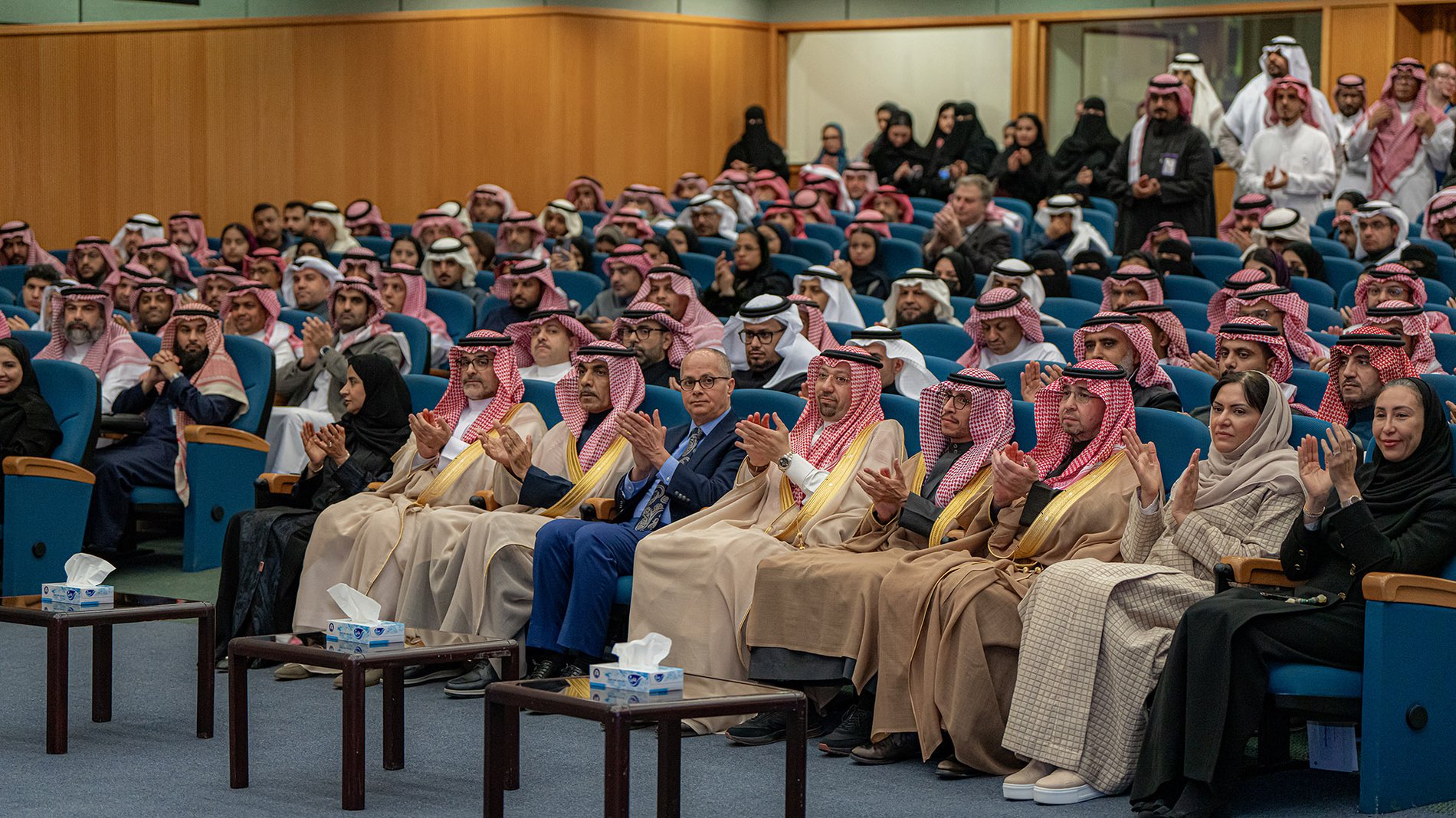
The judges recognized the project for its relevance to ongoing research and industrial needs. Being able to predict MOF stability helps scientists decide which materials are worth developing further. Better predictions reduce the need for repeated trial-and-error experiments, lower costs, and help move promising materials into real-world use more quickly, especially in clean energy and sustainability applications.
Developing the project within the hackathon timeframe presented several challenges. The technical complexity was high, and the team had to integrate artificial intelligence, chemistry, and materials science while responding to realistic research constraints. Progress depended on close collaboration, regular iteration, and guidance from mentors, allowing the team to refine both the scientific logic and the AI architecture as the project evolved.
Following the competition, the team plans to further develop the project with industry applications in mind. Enhancing predictive accuracy and expanding validation efforts are essential steps toward making the tool suitable for practical use beyond the hackathon settings.
The students expressed appreciation for the support provided by KFUPM, including academic, technical, and institutional backing from the Chemical Engineering and Chemistry Department. They also acknowledged the role of the KFUPM AIChE Student Chapter in supporting their participation and collaborative work.
Reflecting on their experience, the team encouraged peers interested in the hackathon to engage early in interdisciplinary initiatives, seek mentorship, and take part in other national-level competitions that challenge both technical and research skills. For them, the hackathon was a useful, practical exercise in translating complex ideas into solutions aligned with real scientific and industrial demands.
You May Also Like View all
- Reporting Week Highlights Compassionate Pedagogy Aug 20, 2026
- Orientation Week Opens a New Chapter at KFUPM Aug 17, 2026
- Research in Action at the Inbound Summer Research Program Aug 06, 2026
- KFUPM Celebrates Research Talent with Mawhiba Aug 03, 2026