Jul 19, 2026
The President's Challenge: More Than a Smart Clock
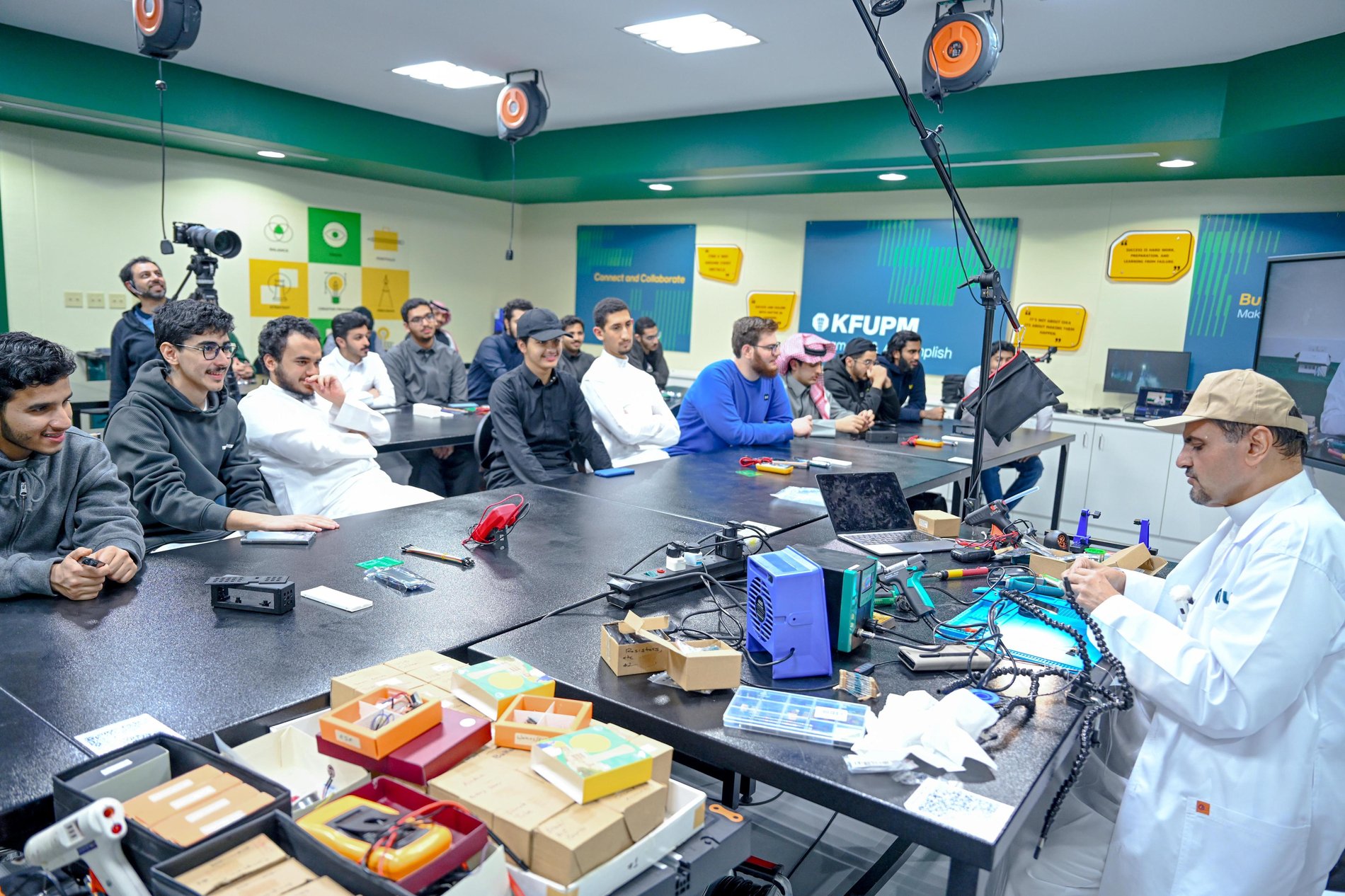
It started as a dare in the makerspace. A group of students, curious about their university president, began asking questions: Does he know technology? Does he build things himself? Is he as tech savvy as we are?
Dr. Muhammad AlSaggaf could have brushed it off with a good-natured laugh. Instead, he said yes. The challenge: design and build a fully autonomous, internet-connected clock that kept perfect time without manual adjustment. Nothing pre-made. The electronics, circuit board, 3D-printed casing, and code would all come from him — built live, at the Student Innovation Hub (iHub), in front of more than 40 students over two hours.
Before he picked up a soldering iron, the students took an informal poll. Roughly half expected him to pull it off; others were hopeful but unsure, and a few doubted him.
He got to work anyway. Using EasyEDA Pro, he designed a custom circuit board around an ESP8266 microcontroller, wiring in an LED matrix display, a temperature sensor, a voltage regulator, buttons, switches, and a piezo buzzer. In Tinkercad, he designed an enclosure and sent it to the 3D printer. The final piece was the software — C++ via VS Code and PlatformIO — syncing the clock to internet time servers every thirty seconds, tracking indoor and outdoor temperatures, pulling live weather data, calculating the day’s five prayer times, and managing alarms and hourly chimes.
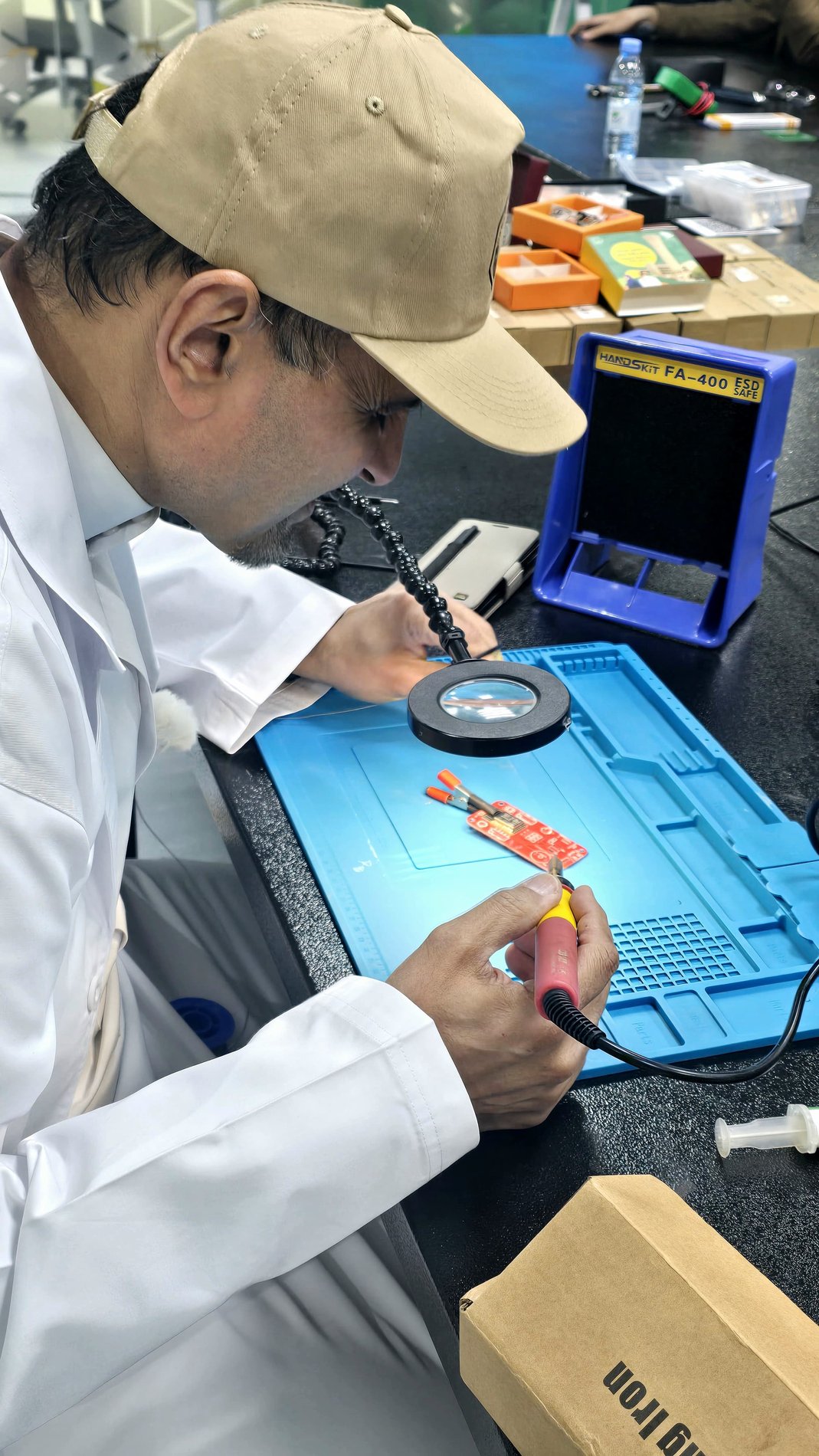
Then came the decision that tested him more than the design had. Rather than use an off-the-shelf development board, he chose to hand-solder the microcontroller directly onto his custom PCB, making the task more difficult, though he’d done it before. This time, it didn’t go smoothly. Tiny solder bridges kept forming between pins. Every fix created a new problem. The clock ticked toward a deadline he knew he wouldn’t make.
And so he stopped. Rather than push through to a shaky result, he explained exactly what had gone wrong and finished the build with a ready-made module instead. The clock came to life as designed. But it was the pause, not the finish, that stayed with people.
Looking back, Dr. AlSaggaf was more interested in discussing what it felt like to struggle in public than discussing the actual electronics and technical side of the challenge. Students know their material, he reflected; but exams and live demonstrations add an insurmountable pressure that has nothing to do with knowledge. Standing there, hands shaking slightly over a soldering iron with a clock ticking overhead, gave him fresh appreciation for what students constantly go through.
In the end, the lesson wasn’t about circuit boards or code. It was about what happens when a leader is willing to fail in front of the people he leads, and what that honesty teaches, far more than a seamless demonstration ever could.
You May Also Like View all
- KFUPM Reclaims 1st Place at SUAS 2026 Sep 22, 2026
- University Research Day Connects Research to Impact Sep 11, 2026
- President’s Award Recognizes Research Excellence Sep 10, 2026
- From Gaming+ to the Global Stage Sep 09, 2026