Jan 22, 2026
Track and Football Field Opens with Campus-Wide Competition
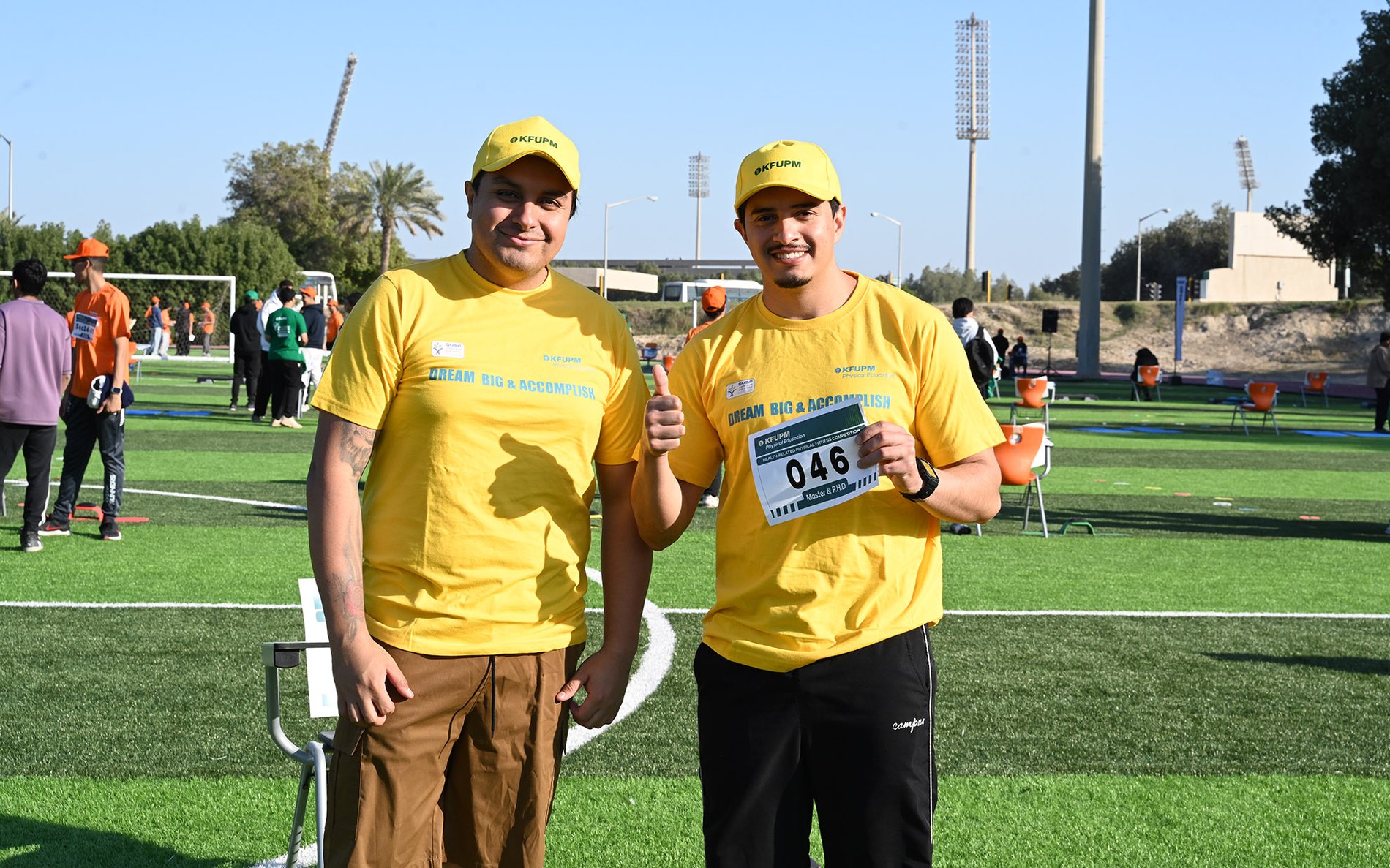
The opening of KFUPM’s newly renovated Track and Football Field was not marked by a symbolic lap, but by hundreds of participants moving across the facility at once. On January 17th, 2026, less than a year after renovation work began, the university hosted a Fitness Competition that turned the first day of the new field into a live test of strength, endurance, and participation.
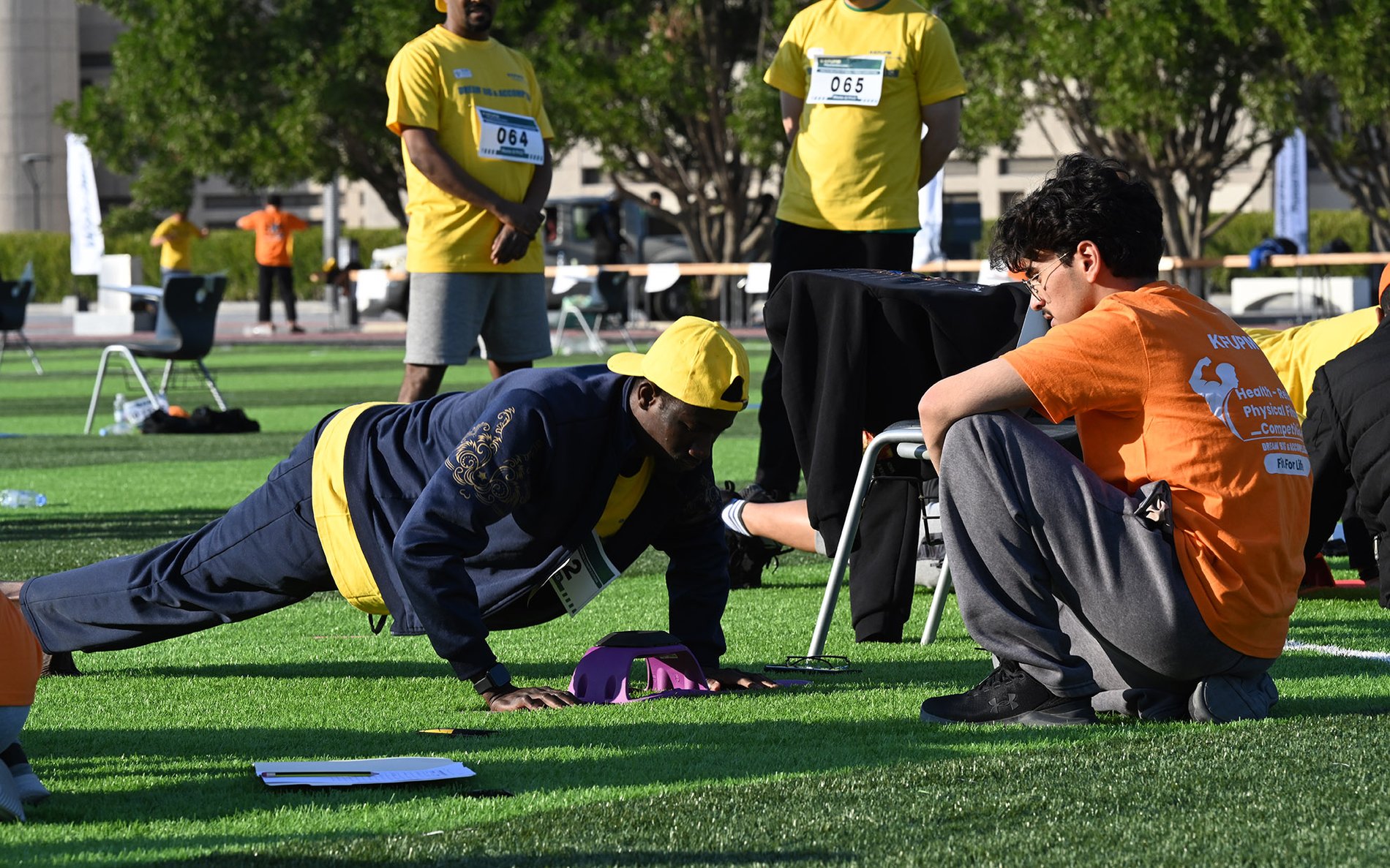
The competition drew 851 participants, signaling strong engagement across campus, with attendance exceeding registrations by just over 5%. Held under the patronage of KFUPM President, Dr. Muhammad Al-Saggaf, the event brought together students, faculty, and staff for a structured fitness assessment comprising four components: standing long jump, step-up test, sit-ups, and push-ups. The high turnout resulted in a fully occupied field, with activities conducted concurrently across multiple stations.
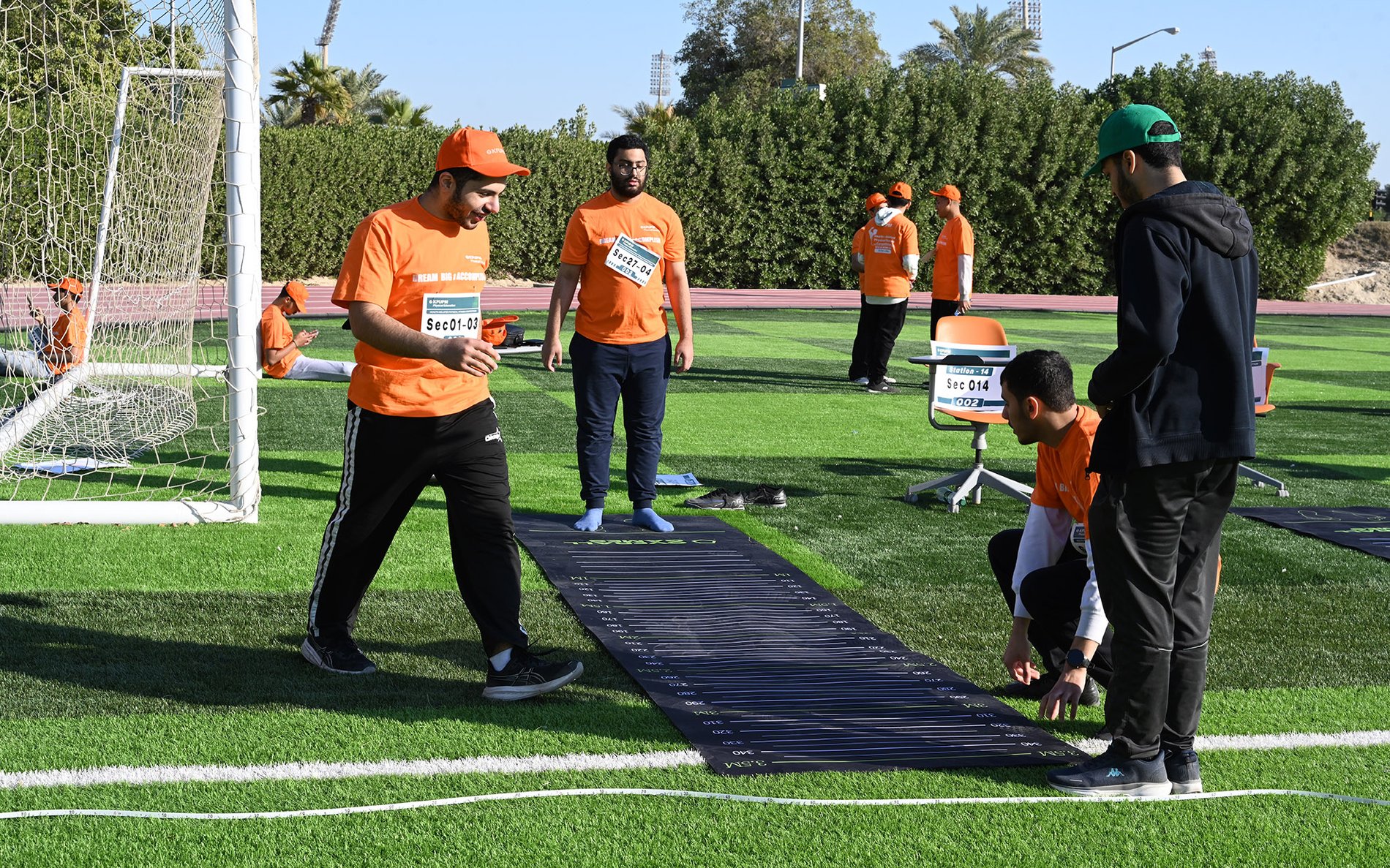
Students accounted for around 89 % of all participants, cutting across academic levels. Within that group, roughly 10% were master’s and Ph.D. students, competing alongside preparatory year and bachelor’s students. Faculty and staff also took part, reflecting representation across the entire university community.
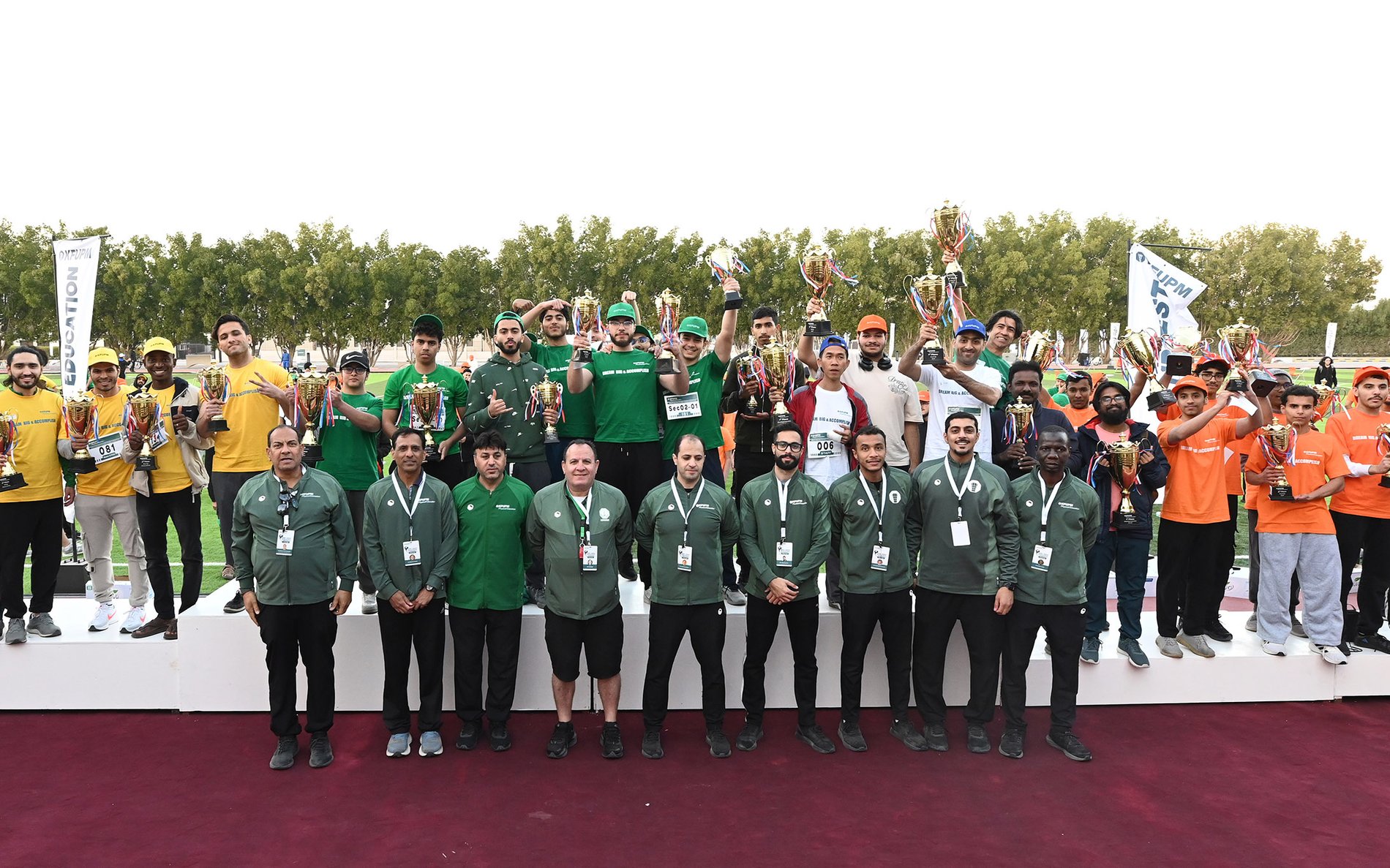
The event opened with the national anthem followed by a speech from Dr. Wail Falath, Dean of the College of General Studies, who welcomed the participants and shared his hopes for the new facility. At the end of the competition, performance was recognized through 60 trophies, awarded to the top three performers in each test and each category. The scale of awards mirrored the scale of participation, reinforcing the competitive element while also maintaining inclusion through its many groups and multiple disciplines.
By pairing the inauguration of the Track and Football Field with a large-scale fitness competition, KFUPM positioned the new facility as an active space from its first day of use. Staying away from the conventional ribbon-cutting, the event purposely mirrored the university’s focus on collective participation, measurable turnout, and visible engagement throughout the entire community.
You May Also Like View all
- Eid Al Fitr Brings the KFUPM Community Back Together Mar 25, 2026
- Celebrating the Spirit of Ramadan: Ghabga 2026 Mar 05, 2026
- Engineering Triumph on the Global Stage Mar 04, 2026
- Strategic Excellence on the Global Consulting Stage Mar 03, 2026