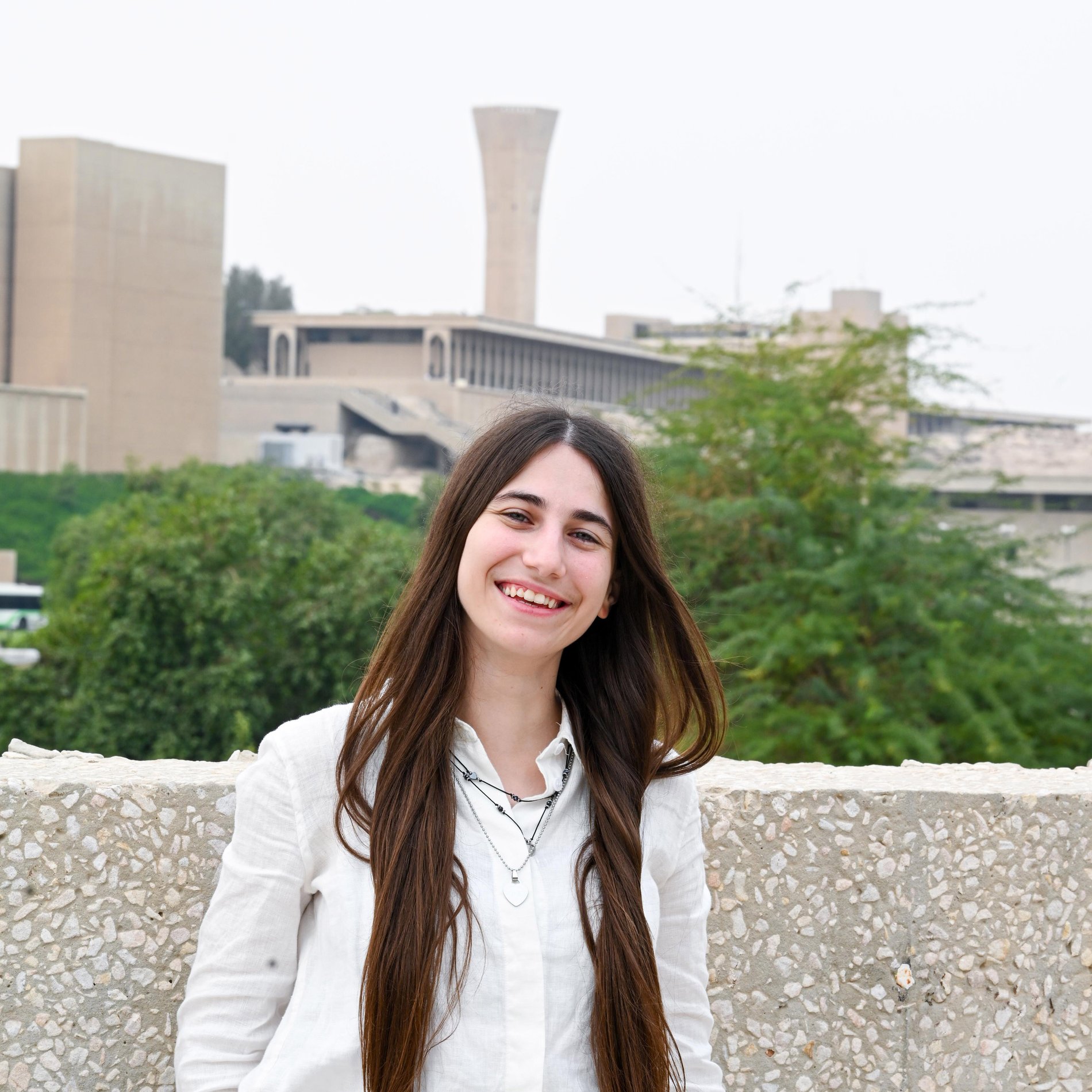
A PhD Path in the Desert’s Microscopic Worlds
"Martina Popovich pivoted from a discontinued master’s program in Argentina to become KFUPM’s first palynology PhD student."
Martina Popovich
Palynology
A PhD was not what Martina Popovich imagined she would be going into when she submitted her first application to KFUPM in July 2024. At the time, she was aiming for a master’s program with a January 2025 start, carefully aligning her plans around the completion of her undergraduate thesis.
However, when her thesis took longer than expected, Martina was faced with a deferral of her plans. Not only that, but soon after, the master’s program she had applied to was discontinued. But, instead of closing the door, the university offered her a different path: admission to its direct-to-PhD track, a route that allows students to bypass the master’s degree entirely. It was an unexpected turn, but one that rerouted her entire academic trajectory.
Martina completed her bachelor’s degree in Geological Sciences at the National University of the South in Argentina, after eight years of study, a period defined by persistence and a growing commitment to a highly specialized field: palynology. Palynology combines geology and biology, examining pollen, spores, and dinocysts preserved as fossils. Through these microscopic remains, scientists reconstruct ancient environments, distinguishing between marine and continental conditions and providing insights that are central to oil exploration.
Martina finalized her bachelor’s thesis just two months before her move to Saudi Arabia, leaving very little time for visa processing and logistical delays. The timeline that followed was compressed, chaotic, and demanding, a pace that slowed down only briefly when she first set foot in the Kingdom.
Arriving at KFUPM, Martina found an academic setting that contrasted sharply with what she knew. The Saudi university system, with its credit-based course selection, differed from Argentina’s mandatory-course structure and allowed her greater flexibility and more customization of her studies. She also encountered a level of technological support she had not experienced before. Laboratories are equipped with all the tools needed for her research, and fieldwork was frequent; within her first month, she participated in three field trips.
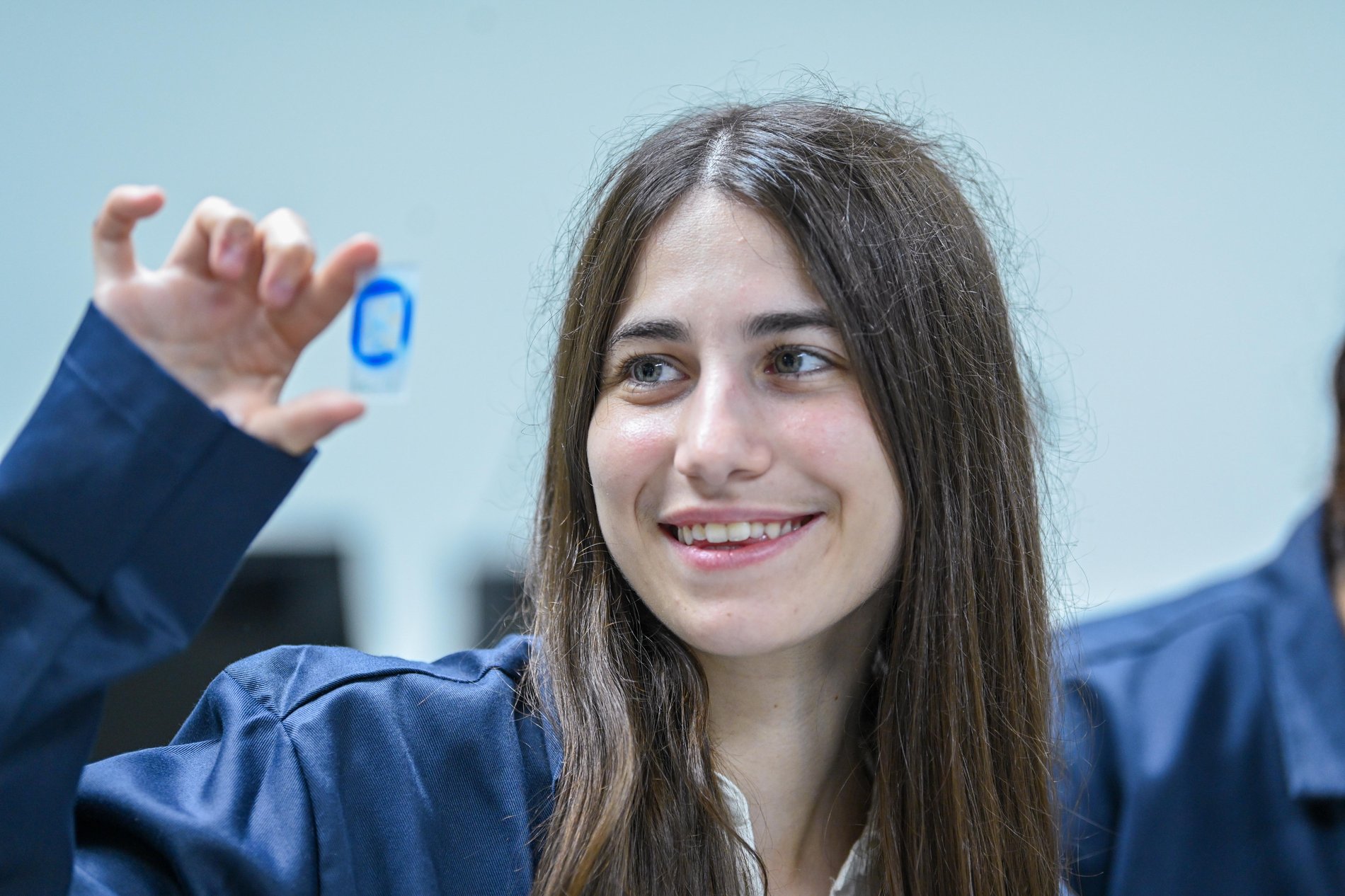
Martina’s research focuses on fossils from the Miocene period, contributing environmental context rather than the conventional study of larger, more visible organisms that often dominate typical paleontological work. At KFUPM, this focus set her apart. She is the university’s first student dedicated to palynology, a distinction that required her to complete prerequisite courses before fully entering PhD-level classes.
Her choice of region was not accidental, however. Most geologists select humid or mountainous landscapes to study; Martina, though, has long been drawn to arid environments. As a child, she used to watch National Geographic programs that explored deserts and ancient Egyptian culture, images that stayed with her. That early curiosity matured into a scientific interest. Desert geology, with its exposed rock formations and distinctive erosion patterns, felt more compelling to her than the mountainous terrain of Argentina. As she puts it, “I saw different things that maybe people don't see… the shapes of the dunes, the shapes of the rocks. I found Saudi Arabia interesting; it connected with my childhood”.
Equally important for her were the people she met. The campus brings together students from many nationalities, creating daily opportunities to compare geological perspectives and methods. Martina shares accommodation with a roommate from Namibia and has worked alongside geologists, petroleum engineers, and geophysicists. Collaboration is built into the academic routine, from weekly presentations in her ethics courses to group projects conducted during field trips. Exposure to machine learning applications further introduced Martina to coding concepts that expanded her technical skill set beyond traditional geology.
As she looks ahead, Martina plans to dedicate upcoming semesters more fully to her research. She is also exploring the possibility of bringing additional co-advisors, particularly from industry players, into her work, strengthening the connection between her studies and applied practice. What began as a deferred application has become a defining chapter, one that ties together childhood curiosity, scientific precision, and a willingness to adapt when plans change.
You May Also Like View All
- Choosing the Challenging Path as a Student Abdulrahman Aldaej Mechanical Engineering
- Building Code, Confidence, and Community Faris Alshahrany computer science
- When Asking “Why” Opens New Paths Areej Alsadun Computer Engineering
- The Kingdom's Transformation Leads Chinese Student to ... Gouchen Zhao Electrical Engineering