Oct 29, 2026
A Two-in-One Solution to Blue Hydrogen Production
The route to producing hydrogen from natural gas comes with a challenge along the way. The process generates carbon dioxide (CO2), which must be captured to realize the intended environmental benefits of using hydrogen as an alternative fuel. That capture typically requires additional equipment, making production more complex and consequently expensive.
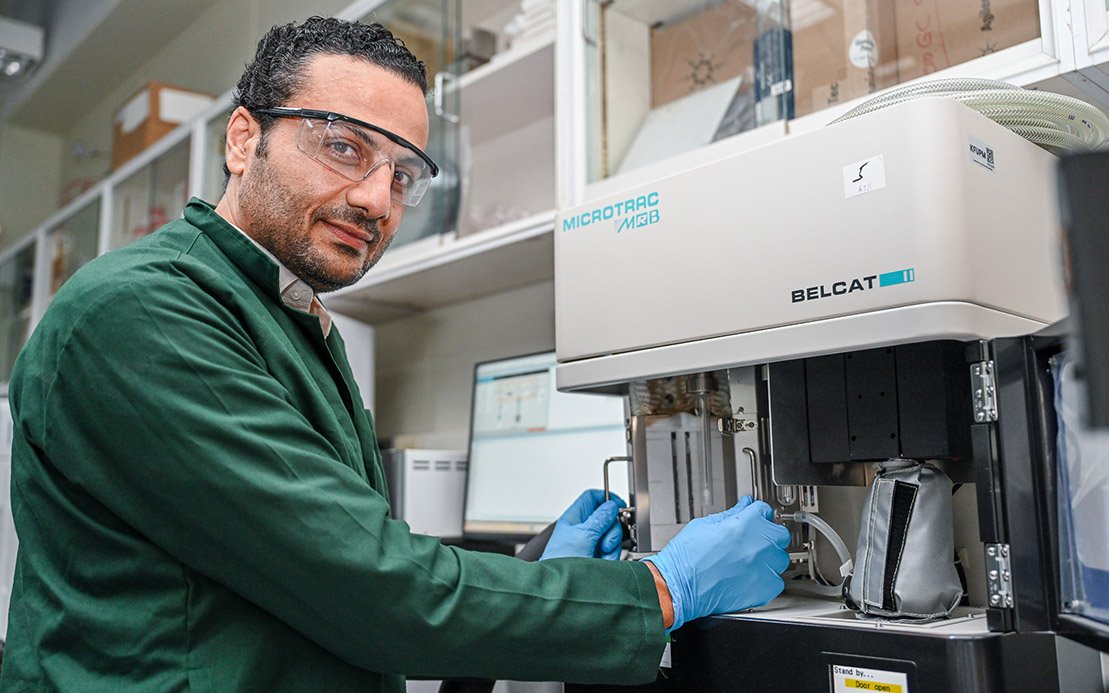
At KFUPM, a team of researchers led by Prof. Medhat Nemitallah, winner of the KFUPM President’s Award 2025 in the Active Engagement category, has developed a material that helps produce hydrogen using steam methane reforming (SMR) while also capturing the resulting CO₂ within the same reactor. Capturing these emissions distinguishes blue hydrogen from gray hydrogen, whose production releases the resulting CO₂ into the atmosphere.
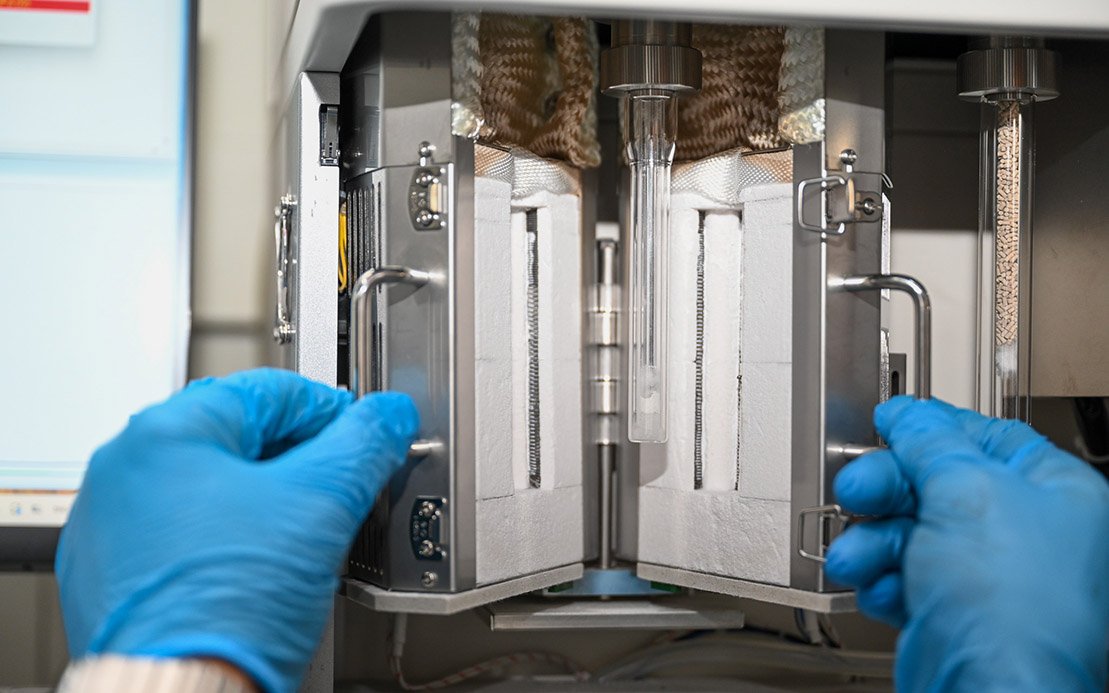
Conventional blue hydrogen systems use separate units for reforming, CO₂ separation, and capture. Known as sorption-enhanced reforming (SER), the team’s in-situ approach integrates hydrogen production and CO₂ capture into one step, eliminating the need for a downstream CO₂ separation system. This, in turn, reduces the number of components and the space they require. The KFUPM-developed process can, therefore, achieve CO₂ capture rates of 97% with 98% hydrogen purity, as well as an approximately 50% reduction in capital and operating costs, and a 25% reduction in the levelized cost of hydrogen production compared with conventional capture methods.
Developing that approach brought together multiple researchers from KFUPM, as well as experts from the multinational corporation Air Products and the UK-based Cranfield University. The university already operates a 1.5-MWth hydrogen production unit using its own materials and reactor design, making its expertise relevant to the team’s work on an integrated production and capture system.
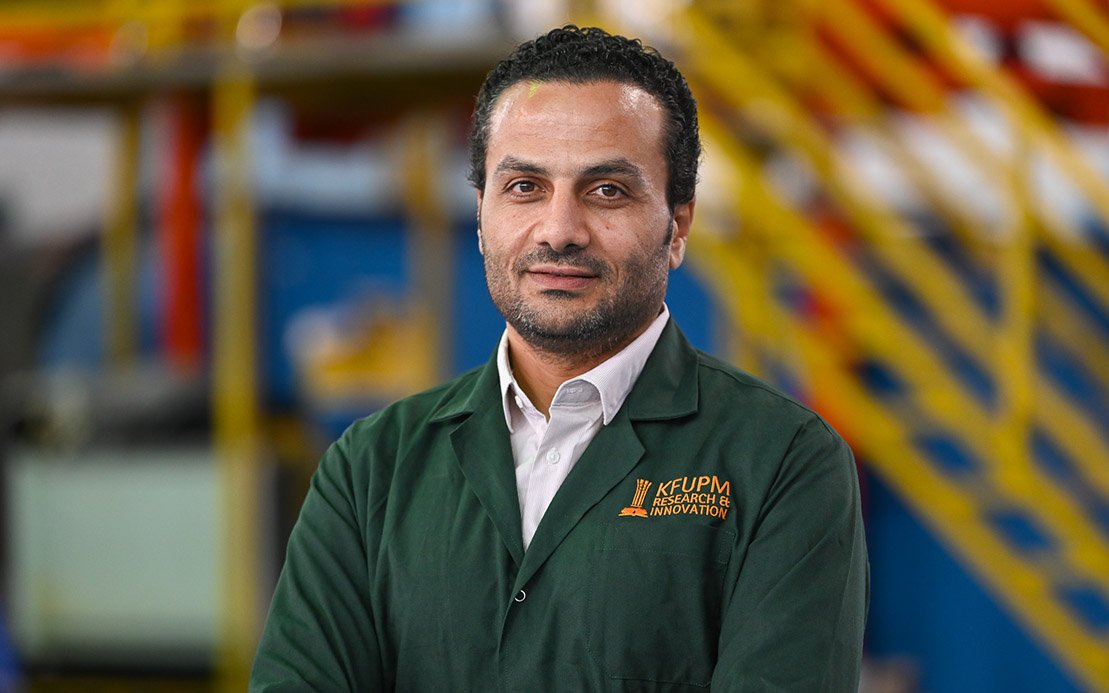
The three-year collaboration included multiple visits between the two universities, with Professor Vasilije Manovic, a highly prominent figure in carbon capture and storage (CCS), serving as the primary counterpart at Cranfield. Supported under KFUPM’s Consortium for Hydrogen Future, the researchers have produced over a dozen publications, most of which are in Q1 journals, such as Elsevier’s International Journal of Hydrogen Energy or the Carbon Capture Science & Technology. The knowledge exchanges between the two universities also created opportunities for closer academic involvement. During one such exchange, Prof. Manovic spent a full week at KFUPM where he also delivered a seminar. The visit subsequently led to his formal appointment as a professor in KFUPM’s Chemical Engineering Department.
As the project collaboration developed, a patent covering both the bifunctional material and the associated reactor configurations was filed and officially issued. A subsequent proof-of-concept grant supported a successful demonstration of the concept, after which a startup application was submitted under the name HYDROGENICA, focused on clean hydrogen production with in-situ CO₂ capture.
Having demonstrated the concept, the project is now at Technology Readiness Level 4, with further development underway. The approved SAR 6 million technology development grant, received from the Research, Development and Innovation Authority (RDIA), will support the next phase of HYDROGENICA’s work. Following product development, the collaboration with RDIA is expected to support the construction of a 5–10-kilowatt pilot plant to test the technology’s potential, with plans for eventual deployment at capacities of hundreds of megawatts.
Alongside this technical work, the collaboration is giving KFUPM students opportunities to participate directly in the research. A signed MoU between KFUPM and Cranfield University includes researcher and student exchange visits, student co-advising, and training to develop participants’ skills. Two KFUPM master’s students and one PhD student have already traveled to Cranfield to conduct collaborative work as part of the project. That involvement has also extended to a high-school participant from Mawhiba, Nawaf Almulla, who joined the project and earned international recognition for his contribution. His work won a gold medal at ITEX 2025, the International Invention, Innovation and Technology Exhibition in Kuala Lumpur, Malaysia.
The project also connects with Prof. Medhat’s wider work at KFUPM, including further collaborations with Air Products subsidiaries in the Middle East, UK, and Spain on a TRL 6 software model that reproduces experimental and field measurements with an error margin below 1%. Its academic outputs include the Elsevier-published book entitled "Clean Hydrogen From Production to Mobility”, led by Prof. Medhat with co-authors from Cranfield University, Northumbria University, and the National University of Malaysia.
These efforts attest to KFUPM’s continued growth and leadership in research and academia, linking scientific knowledge with practical applications. Sustainable energy remains a key priority for the university, with several teams investigating ways to meet energy needs while reducing environmental impacts. Three of KFUPM’s interdisciplinary research centers (IRC), namely the IRC for Sustainable Energy Systems, IRC for Hydrogen Technologies and Carbon Management, and IRC for Industrial Nuclear Energy, support this direction through complementary areas of research. This multidisciplinary approach benefits from the university’s continued ability to attract top students and faculty alongside international collaborators, encouraging diversity of thought and opening opportunities for research participation from undergraduate through doctoral study.
Research referenced:
You May Also Like View all
- KFUPM Leads the Arab Region for a Fourth Consecutive Year Oct 28, 2026
- Professor Elected to Optica’s 2027 Fellow Class Oct 27, 2026
- AJSE Keeps Gaining Momentum After 50 Years Oct 22, 2026