Nov 29, 2026
From Campus Leaves to Advanced Technologies
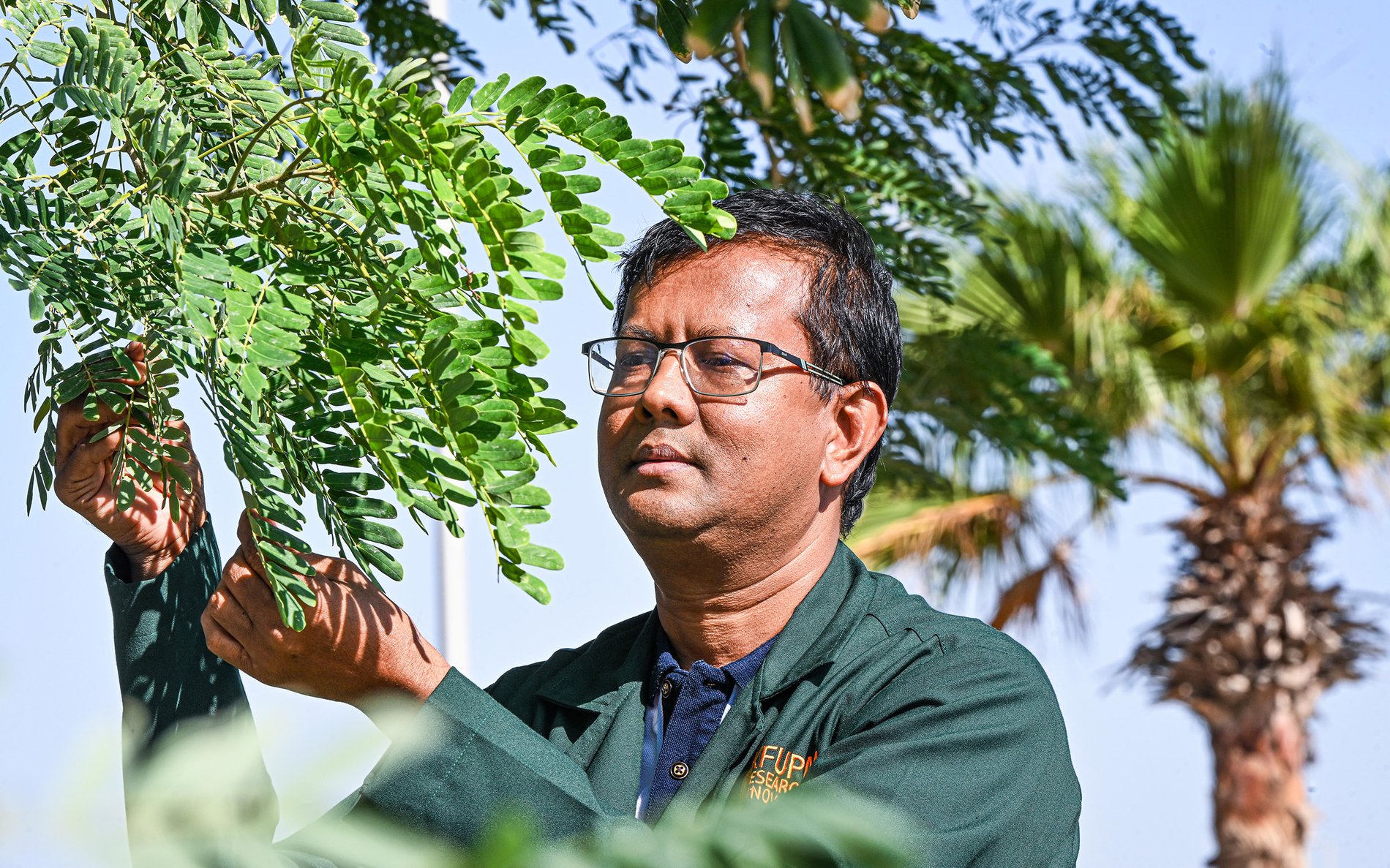
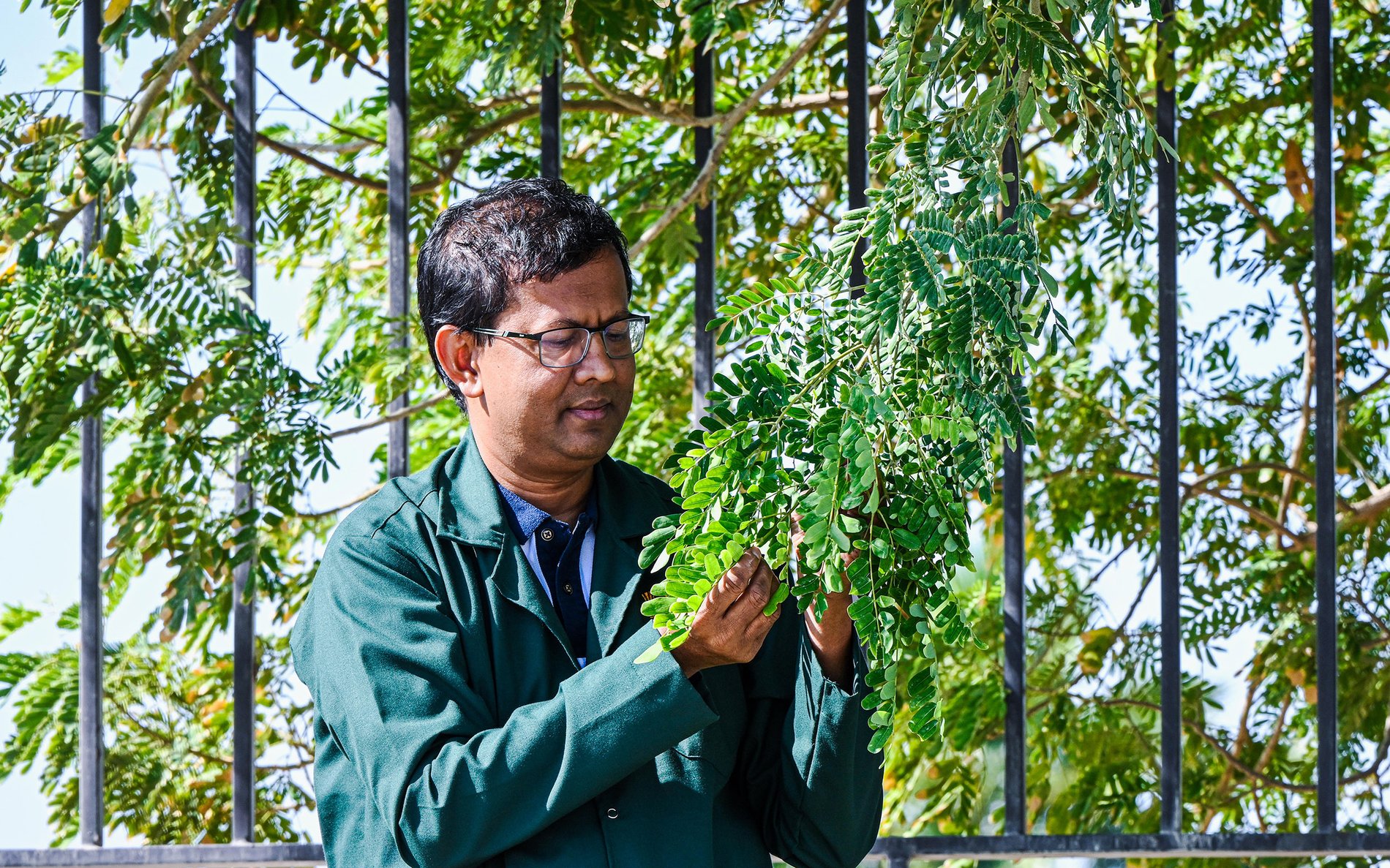
What if the leaves of a tree growing on campus could hold the potential to advance clean energy and sustainable technologies? At KFUPM, researchers have found an unexpected source of high-performance carbon materials in Albizia procera, a resilient tree commonly found across the university's campus. Its leaves naturally contain both carbon and nitrogen, the two main elements for producing nitrogen-doped carbon, a material used in energy storage and carbon capture. Unlike conventional methods that introduce nitrogen from an additional source, the plant's naturally nitrogen-rich composition allows the researchers to develop the material without relying on a separate nitrogen source
The research group led by Dr. Md. Abdul Aziz, Lead Research Scientist at the Interdisciplinary Research Center for Hydrogen Technologies and Carbon Management (IRC-HTCM), has developed an alternative approach using the leaves of Albizia procera. Through controlled heating and chemical activation, the team converted the leaves into highly porous carbon materials with enhanced electrical and chemical properties. The resulting Carbon is a versatile material that’s particularly valuable for multiple scientific and industrial applications, from energy storage and carbon capture to clean hydrogen production and advanced electronics.

One of its most promising applications involves sustainable construction. Working with specialists in civil engineering and materials science, the researchers incorporated activated carbon derived from Albizia procera leaves into cement-based materials and exposed them to controlled CO₂ curing conditions. The carbon's porous structure helps capture CO₂, while the carbonation process promotes the formation of calcium carbonate within the cement, improving its structural properties.
The results demonstrated a significant improvement over the study's conventional reference materials. Adding just 3% of the plant-derived activated carbon under pressurized carbonation curing increased calcium carbonate formation by more than twelvefold compared with the water-cured reference without activated carbon. The resulting mortar also showed a 31% increase in compressive strength, a 67% increase in flexural strength, and a 43% reduction in water absorption. These findings highlight the material's potential to support stronger, more durable construction materials while increasing CO₂ sequestration.
The same plant-derived carbon has also demonstrated promising results in energy storage. By optimizing its porous structure and nitrogen content, the researchers developed electrode materials for supercapacitors, devices capable of rapidly storing and releasing electrical energy. Laboratory testing achieved a specific capacitance of 231 farads per gram, demonstrating the material's potential for advanced energy-storage applications. This development also resulted in a KFUPM-owned U.S. patent covering the preparation of nitrogen-enriched carbon from Albizia procera leaves.
Beyond construction and energy storage, the material has applications in green hydrogen production. Metal oxide materials used in water electrolysis typically suffer from low conductivity, and adding the plant-derived carbon to these oxides significantly improves their conductivity.
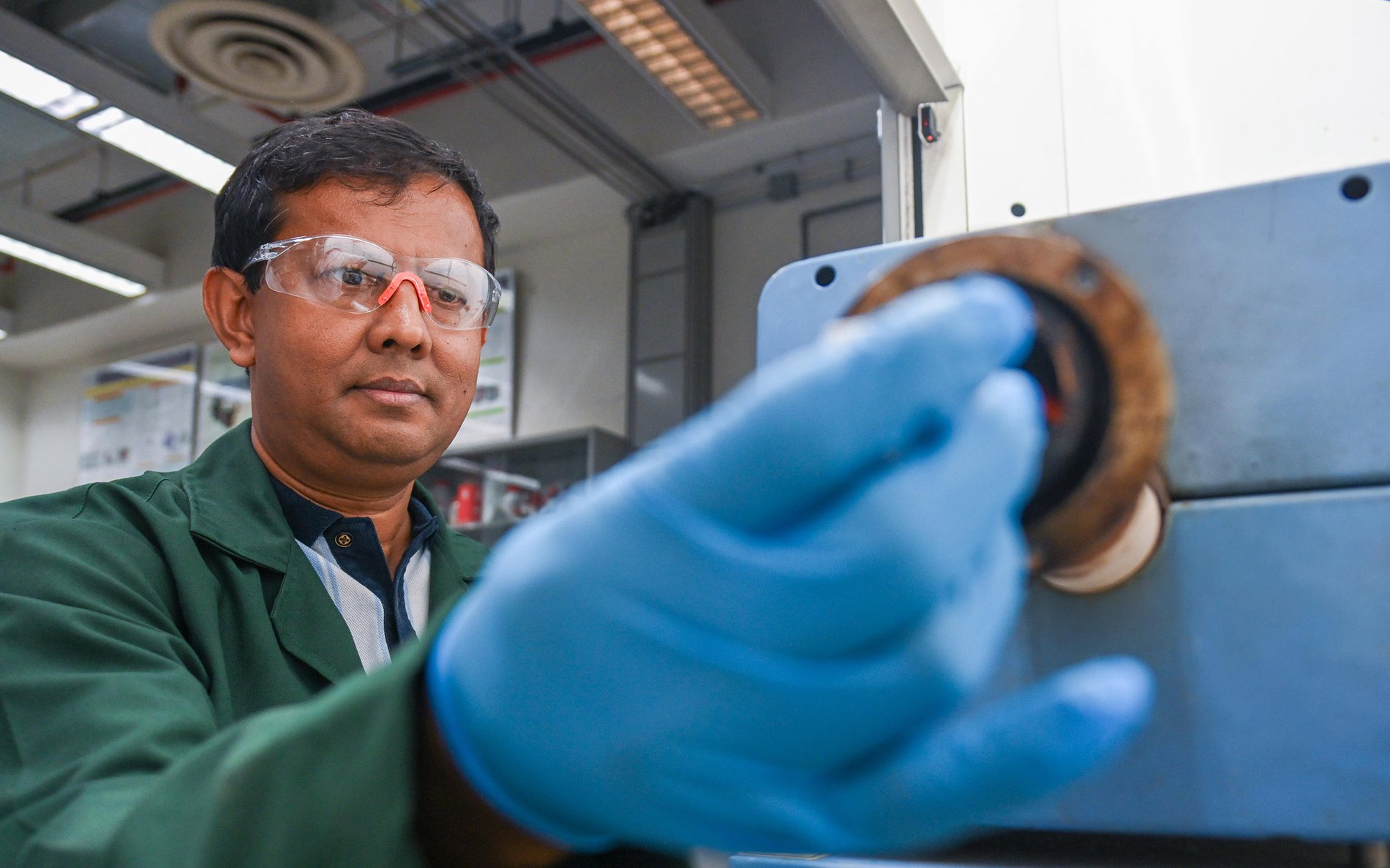
Developing these applications has required collaboration across several disciplines, including physics, chemistry, materials science, civil engineering, and environmental sciences. The sustainable construction study brought together researchers from KFUPM's IRC for Hydrogen Technologies and Carbon Management, IRC for Construction and Building Materials, and relevant academic departments, including Prof. Zain Hassan Yamani from the Department of Physics and Prof. Shamshad Ahmad from the Department of Civil and Environmental Engineering, alongside contributors affiliated with Alasala Colleges and Saudi Aramco. The broader research has also involved academic contributors from international institutions, including Kyoto University in Japan and universities in Bangladesh.
KFUPM graduate students also contributed to the research. Key contributors included Syed Shaheen Shah and Amar K. Mohamedkhair from the Department of Physics; Khaled M. Kharma from the Department of Civil and Environmental Engineering; Mohammed Ameen Ahmed Qasem from the Department of Chemical Engineering; and Bashir Ahmed Johan from the Department of Materials Science and Engineering, alongside several other KFUPM students.
The research has produced multiple scientific publications since 2019, including studies in Arabian Journal of Chemistry, ACS Omega, and Results in Engineering, alongside review articles examining the plant's potential in energy, environmental technologies, and sustainable development. The work has also received research support through KFUPM's IRC-HTCM, including funding acknowledged under project INHE 2311.
Reflecting on the significance of the research, Dr. Aziz stated:
"The findings from our systematic investigation demonstrate that Albizia procera is far more than a plant of traditional or ecological value, it is a versatile platform capable of driving green material innovation, clean energy conversion, and carbon management"
While the technologies share the same natural resource, they have reached different stages of development. According to the research team's assessments, the cement-based application has reached approximately Technology Readiness Level (TRL) 4, with laboratory validation demonstrating its performance. The supercapacitor application is at approximately TRL 3, while the hydrogen-related and photodetector applications remain at earlier proof-of-concept stages, around TRL 2.
Research referenced:
You May Also Like View all
- Student Team Strikes Gold at iGEM 2026 in Paris Nov 22, 2026
- Annual Tradition Brings Walkers Together for Health Nov 17, 2026
- Turning Wastewater into a Water Resource for the Kingdom Nov 12, 2026