Oct 12, 2026
KFUPM EMBA Makes Its First Financial Times Top100 Appearance
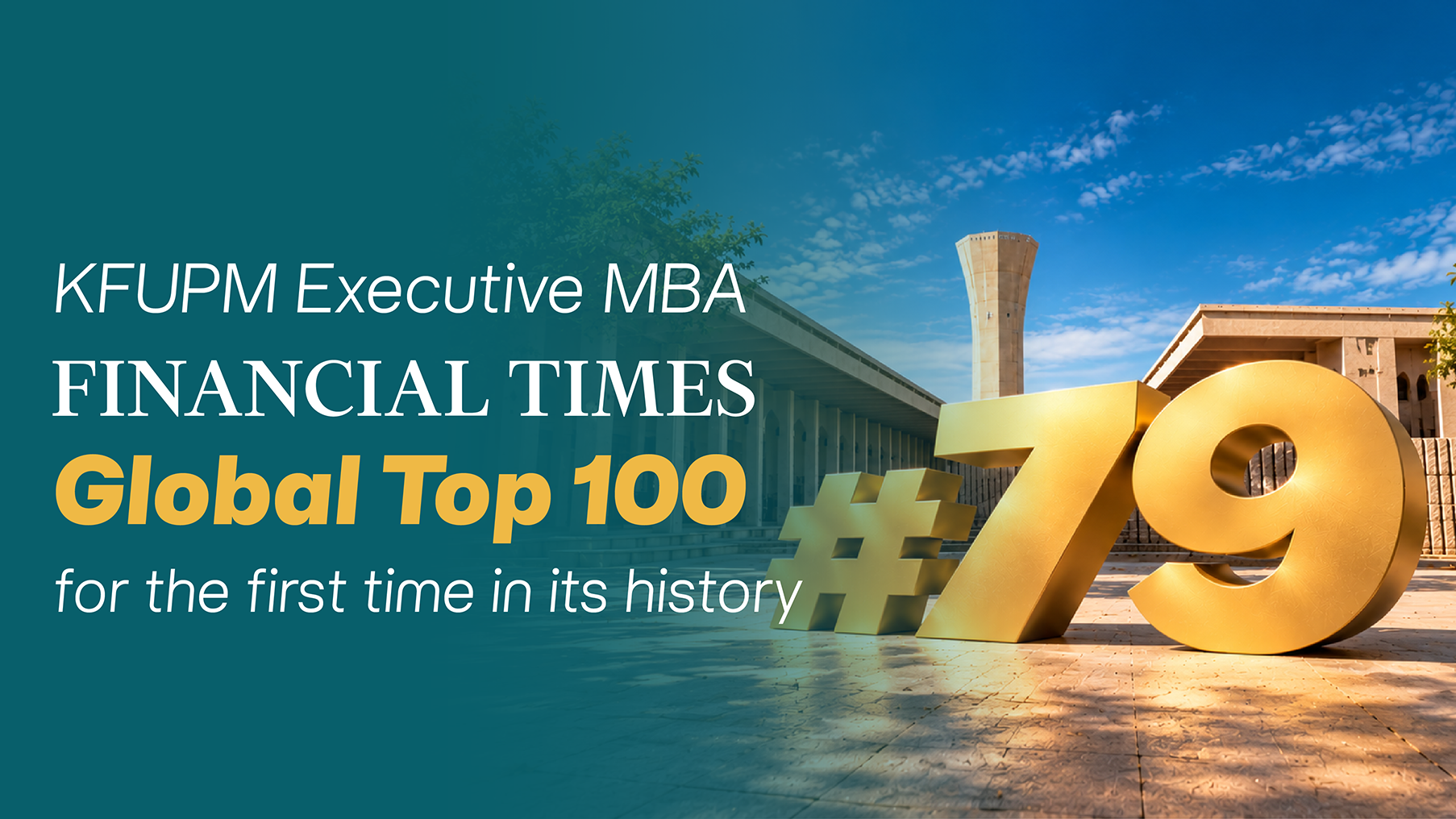
KFUPM Business School’s Executive MBA has entered the Financial Times Global Top 100 in this category for the first time, placing 79th worldwide in the 2026 ranking. Revealed on Monday, October 12, the list includes KFUPM as the only Arab university. Being developed and delivered exclusively within the Kingdom, the program’s ranking adds to the significance of this result as well as to the university’s international recognition.
Landing on the Financial Times rankings requires a thorough assessment that very few universities are equipped to pass. Now in its 26th edition, the Financial Times assessment first considers how graduates progress professionally and whether their studies meet their expectations. Six alumni criteria examine current salaries and salary increases, career growth and work experience, achievement of study aims and the quality of alumni networks. These measures connect the assessment to the reasons professionals pursue an executive business degree and the results they experience afterward.
The evaluation also looks at the academic environment supporting that experience. Information supplied by schools covers another 10 criteria, including the provision of environmental, social, and governance courses. Faculty and student gender diversity also contribute to the assessment. Research receives a separate examination which considers articles published by full-time faculty in 50 internationally recognized academic and practitioner journals. Together, these measures place graduate outcomes within the context of the school’s teaching and research activities.
In its first appearance, KFUPM ranked ahead of established programs with repeated listings in the Financial Times rankings, giving KFUPM’s executive education an additional point of reference internationally. These include programs at Georgia Tech, Rice University, Rutgers Business School, Cranfield School of Management, Copenhagen Business School, and Melbourne Business School.
For the university, this recognition connects with its work to align education with industry needs. The EMBA forms part of a continued effort to provide practical knowledge and skills that graduates can apply in leadership roles, supporting innovation and contributing to Saudi Arabia’s development goals.
You May Also Like View all
- GSR 2026 Connects Students Through Research and Innovation Oct 08, 2026
- KFUPM Research Aims to Store Renewable Power Longer for Less Oct 07, 2026
- Students’ AI Greenhouse Ranks 2nd Out of 250 Oct 04, 2026