Oct 04, 2026
Students’ AI Greenhouse Ranks 2nd Out of 250
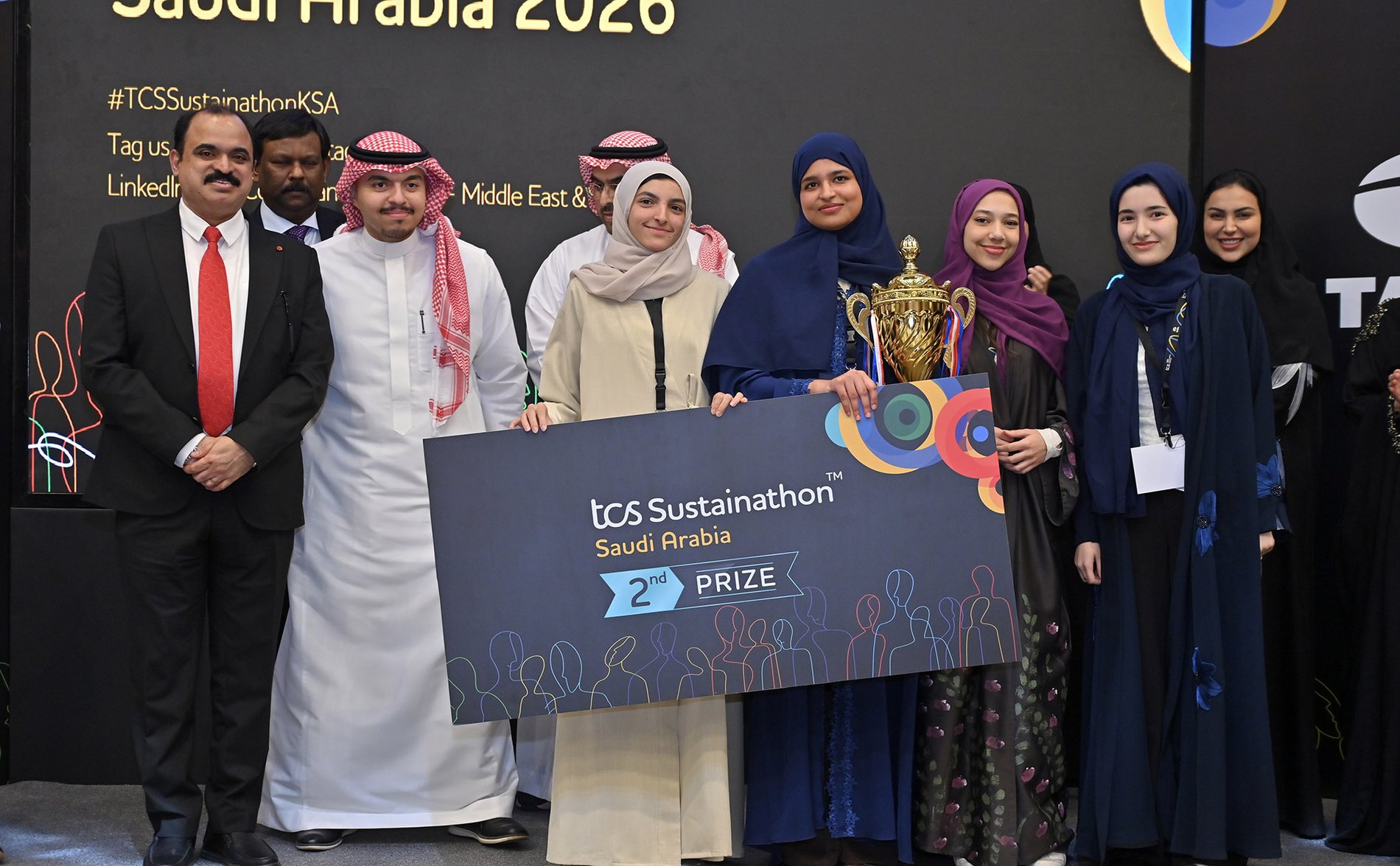
A multidisciplinary team of four KFUPM students secured second place at the TCS Sustainathon KSA 2026 Grand Finale, held in Riyadh on September 30. The team achieved this position out of 250 registered teams, with only the top 10 teams invited to present their projects in person and three winners selected overall.
Organized by Tata Consultancy Services Middle East and Africa, the competition challenged participants to apply artificial intelligence to sustainability across agriculture, energy, and healthcare. Representing KFUPM, the team included Zoha Ahmad, a Chemical Engineering student; Lemar Alghabra, an Industrial and Systems Engineering student; Jood Alfaraj, an Architectural Engineering student; and Yara Alsharif, a Mechanical Engineering student.
The team’s project, Aero Loop, is an artificial intelligence powered aeroponic greenhouse designed for hyper arid climates. The system grows plants with their roots suspended in air and delivers nutrient mist only when needed. Using thermal, RGB, and multispectral cameras, artificial intelligence detects signs of plant stress and triggers targeted misting. Solar assisted cooling and closed loop water recovery further help reduce water and energy consumption.
To demonstrate the concept, the students developed an interactive digital twin simulation that shows how Aero Loop senses environmental conditions, makes decisions, and responds in real time. The project addresses a key challenge in Saudi Arabia: increasing local food production while using fewer resources.
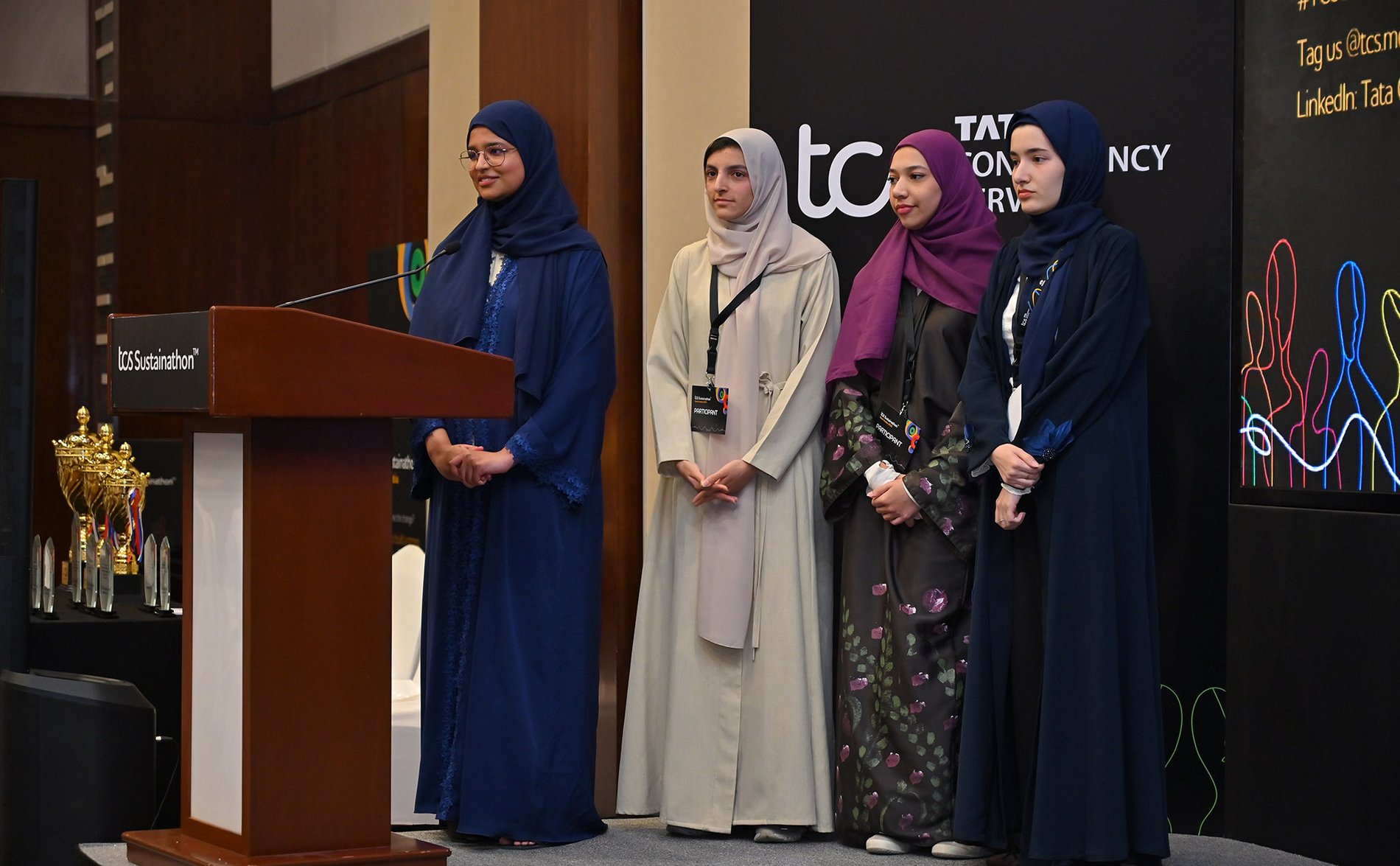
One of the team’s main challenges was explaining the project’s complex technologies, including aeroponics, artificial intelligence, solar cooling, and water recovery, within a limited presentation time. The students overcame this by dividing responsibilities according to their strengths, simplifying the technical language, developing the simulation, conducting extensive research, and repeatedly rehearsing their presentation and responses to potential questions.
The team was motivated by the opportunity to address a real-world challenge in Saudi Arabia and to combine their interests in artificial intelligence, sustainability, and engineering in a solution aligned with the goals of Saudi Vision 2030. Their participation also enabled them to develop their problem solving, innovation, teamwork, and presentation skills while engaging with industry professionals and student innovators from across the country.
KFUPM supported the team by officially enabling the students to represent the university at the competition and facilitating the necessary absence approvals. This support allowed them to attend the Grand Finale, present Aero Loop, and represent KFUPM on a national platform.
The students’ next step is to validate Aero Loop through discussions with local farmers and agricultural companies. Encouraged by the competition judges, the team hopes to explore opportunities for real world testing, partnerships, and the potential implementation of the system at a larger scale.
Reflecting on their experience, the students advised others interested in similar opportunities to begin with a real problem and develop a solution that is practical, measurable, and easy to explain. They also emphasized the importance of teamwork, reliable research, early preparation, and openness to feedback, highlighting that competitions are not only about winning, but also about learning, networking, and transforming ideas into meaningful projects.
You May Also Like View all
- AJSE Keeps Gaining Momentum After 50 Years Oct 22, 2026
- Edges of Attention Captures Everyday Beauty on Campus Oct 19, 2026
- KFUPM Students Win First Place in Energy Hackathon Oct 15, 2026
- Students Shine at International Case Competition in Norway Oct 14, 2026